Jalebi
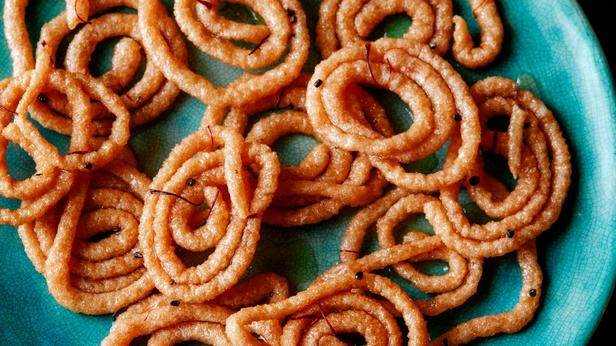

Complexity: average
Servings: 20
"Jalebi is a very popular delicacy in India, most often found at street vendors," says Nidhi Jalan. "It is also prepared for major holidays, including weddings, Holi, Diwali, and Eid al-Adha. The most delicious jalebi are made halvai (confectioners). One of them taught me all the intricacies of their preparation. This sweet originally appeared in Persia under the name teeth and was brought to India by Persian traders. The perfect jalebi is made from fermented dough and is crispy on the outside, slightly chewy on the inside, with a slight tartness from the fermentation process. While still hot, the jalebi are dipped in a saffron- and cardamom-flavored syrup and eaten immediately. When the fermented dough is fried, a chemical process occurs, creating a hollow in the center of the jalebi that fills with the aromatic syrup. If you don't want to waste time making the dough, you can buy a package of Gits Jalebi mix. It even comes with a bottle. The flavor, of course, isn't as amazing as jalebi made from fermented dough, but it's still good. It's a real little miracle!
1 glass (st.) - 250 ml.
3/4 cup (st.) - 180 ml.
2/3 cup (st.) - 160 ml.
1/2 cup (st.) - 125 ml.
1/3 cup (st.) - 80 ml.
1/4 cup (st.) - 60 ml.
1 tablespoon (tbsp) - 15 ml.
1 teaspoon (tsp) - 5 ml.
1/5 teaspoon (tsp) - 1 ml.
Ingredients for the recipe:
- 1 cup premium flour + more as needed
- 1/4 cup rice flour
- 1 drop of orange gel food coloring or a pinch of turmeric powder
- 1 cup white cane sugar
- 0.5 tsp. coarsely crushed green cardamom seeds
- 1/4 tsp saffron threads (or more)
- 0.5 tsp lemon or lime juice
- Vegetable oil, ghee or a mixture of both, for deep frying
- Special equipment: a soft plastic sauce bottle or a pastry bag with a 4-5 mm opening; a deep-fry thermometer
We recommend







Cooking the dish according to the recipe:
- Combine the wheat and rice flours in a medium bowl. Mix well. Add 3/4 cup warm water and mix well until a smooth, thick batter forms. If the batter is too dry and uneven, add water 1 tablespoon at a time until you reach the desired consistency. The batter should be slightly thicker than pancake batter. Cover and let it ferment at room temperature until bubbly, 24–36 hours.
- Once the dough has fermented, add food coloring or ground turmeric. Food coloring gives the jalebi a pleasant orange color, while turmeric gives it a more yellowish hue.
- The fermented batter should have the consistency of pancake batter. If it's too thick, add water 1 tablespoon at a time until you achieve the desired consistency. If it's too runny, you can add a little flour. The consistency of the batter is crucial for good jalebi. If it's too runny, you won't get a nice round shape. And if it's too thick, the jalebi will be greasy and soft. Transfer the batter to a sauce bottle or a pastry bag with a 4-5 mm diameter opening.
- Combine sugar, cardamom, saffron, and 3/4 cup water in a small saucepan. Cook over medium heat until the syrup thickens slightly and becomes sticky, 5–7 minutes. Stir in lemon juice. Keep warm.
- Pour about 3 cm of oil, ghee, or a mixture of the two into a wide wok or large, deep frying pan. Attach a deep-frying thermometer and heat the oil over medium-high heat to 170°C (350°F). It's important that the oil is moderately hot. If it's too hot, the jalebis will burn, and if it's not hot enough, they'll turn out flat. Be careful if you're using a sauce bottle with a screw-on lid. If the batter is too thick, it will be difficult to squeeze out, and the lid may fly off. I recommend testing it on a plate first.
- Pipe the batter into the hot oil in concentric circles or spirals, 8–10 cm wide, from the inside out, finishing with one quick movement toward the center of each jalebi to prevent the spiral from unraveling. Continue pipetting the batter into the oil until the pan is about half full. Fry the jalebis, turning them, until crisp, about 45 seconds per side. Using a slotted spoon or tongs, transfer to a paper towel-lined plate or tray. Repeat with the remaining batter.
Chef's Note
Traditionally, jalebis are fried in ghee, but I prefer to use a mixture of ghee and vegetable oil. You can also fry them in oil alone. Getting the spirals perfect takes a little practice. Sometimes I get more creative and squeeze out Jackson Pollock-style squiggles, but the taste is still amazing. - Dip the jalebis in the warm syrup. If you like it sweeter, you can let them soak in the syrup for about 10 seconds. Jalebis are best eaten immediately. If you made them ahead of time, don't coat them in syrup until ready to serve. Just before serving, warm the syrup and dip the jalebis.
Categories: