A Gastronomic Adventure: Bangkok Street Food
Bangkok is a city to be explored not only with your eyes but also with your taste buds. Street food is as much a landmark of the Thai capital as the Big Buddha or the Royal Palace. The spicy aromas wafting around the simple cafes and food stalls are mouth-watering. It's worth the courage to explore new culinary horizons.
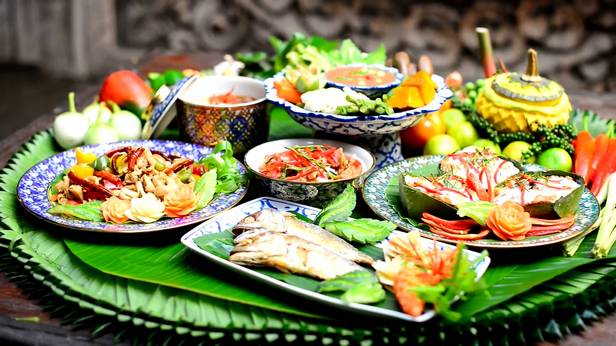
The Thai capital is amazing; only here can Asian and European traditions blend on an almost metaphysical level. The result is something new, vibrant, and incredibly interesting in every aspect of life. This is especially true for gastronomy. Bangkok's street food is a cultural phenomenon, generously seasoned with spices and exuding a magical aroma that tourists instantly fall in love with or loathe. Here are the dishes Thai cuisine, which are worth trying.
Papaya Salad (Tom Sum)
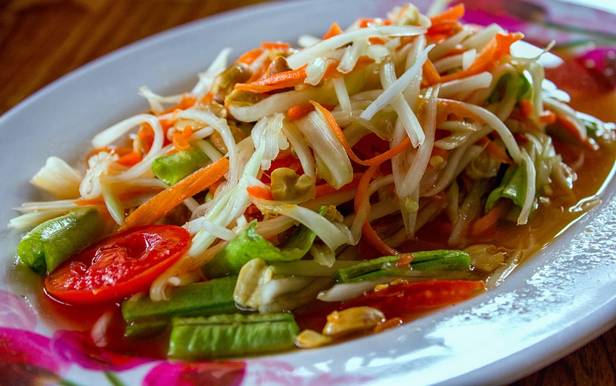
This is the most common dish in Bangkok. The stall where you can try it is easily recognized by the heavy mortar in which a tanned woman confidently crushes julienned green papaya with a pestle and a mixture of peppers, palm sugar, and fish sauce. The delicacy is complemented by scarlet tomatoes. Tom Sum has a simultaneously spicy, sour, and sweet flavor. A true explosion for the taste buds.
There are many variations of papaya salads: with the addition of peanuts, seafood, tiny dried shrimp, green beans, etc.
Price: 30 baht.
Roasted Duck (Ped Yang)
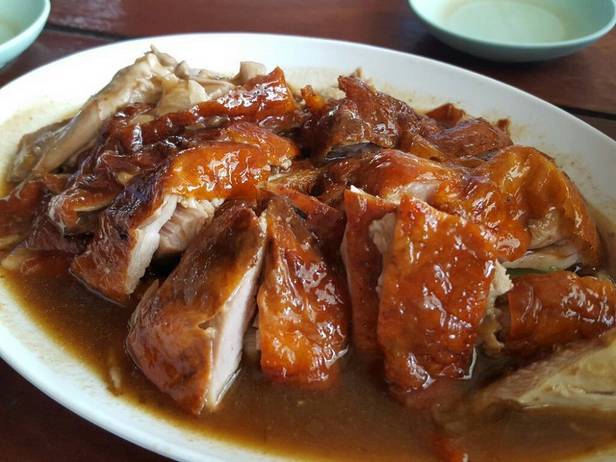
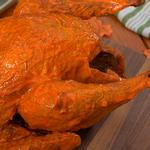
Originally prepared in the neighborhoods of Chinatown, this delicious, crispy-skinned duck has since migrated to restaurants, food courts, and street vendors. The bird is marinated in a special marinade, which gives it its distinctive red color and slightly sweet flavor. The finished meat is sliced, served on a plate, drizzled with a special soy sauce, and garnished with rice. Duck pieces are also added to wontons or noodle soup with kale and egg.
Price: from 80 baht.
Omelette with mussels (Hoy Tod)
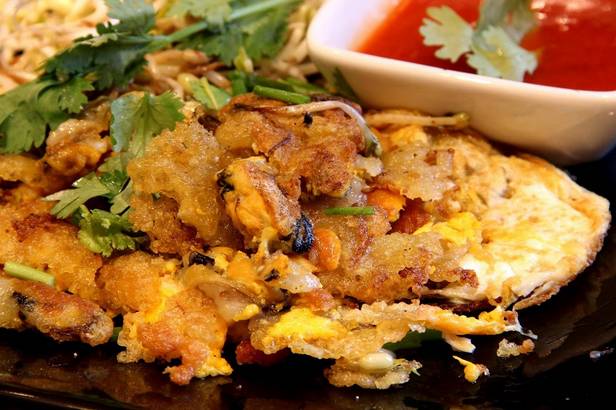
Although Bangkok is located a considerable distance from the ocean, the city is not short of seafood. Fresh and delicious, it's a staple in every Thai's daily diet. An oyster omelet is a filling street food that takes just minutes to prepare. A generous serving is complemented by fried green beans. Chili pepper is a common, but optional, ingredient in Hoi Tod. Be sure to let the street chef know if you don't like spicy food.
Price: 40 baht.
Tom Yum
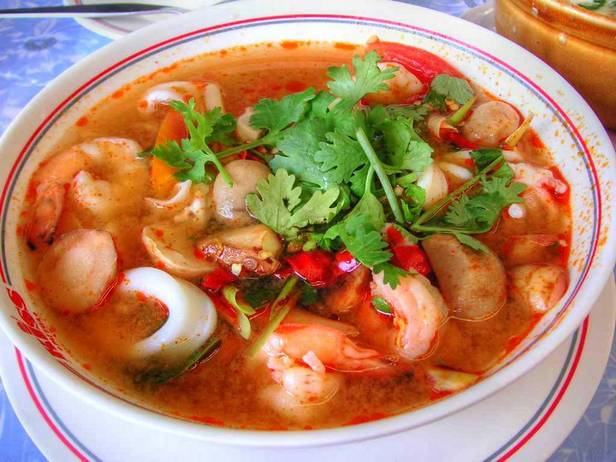
Tom Yum soup is a culinary classic served in every Thai restaurant. This delicacy is one of those rare dishes where all flavors are present at once. Palm sugar adds sweetness, lime adds a touch of tartness, fish sauce provides saltiness, and chili pepper adds heat.
The price is about 60 baht.
Tom Yum recipes:
Thai Tom Yum Soup
Hot and sour Thai soup with shrimp "Tom yum kung"
Kebabs
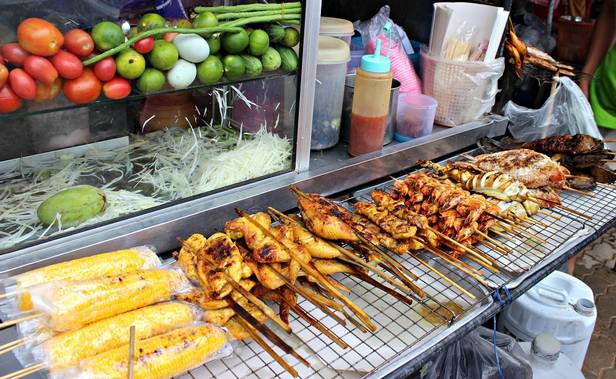
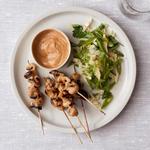
Early in the morning, when Bangkok residents go to work, and in the evening, when tired workers return home, mobile food stalls appear on the streets. These are carts, often converted from motorcycles with sidecars. The passenger seat is transformed into a grill where pork skewers (Moo Ping), fish (Pla Pao), sausages (Sai Krok Isaan), and chicken legs (Kai Yang) are cooked over charcoal. Some food stalls specialize in a single dish, offering a side dish of vegetables and sticky rice, but most offer an unlimited selection at these mobile eateries.
Price: from 5 to 25 baht.
Kebab recipes:
Chicken skewers with spicy Thai salad
Pork kebabs with chili sauce
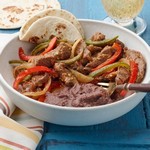
Thai-style beef skewers with marinated vegetables
Chicken sauté with spicy peanut dipping sauce
Chicken sauté with peanut sauce
Marinated shrimp kebabs
Boat Noodles (Kwai Tiao Rua)
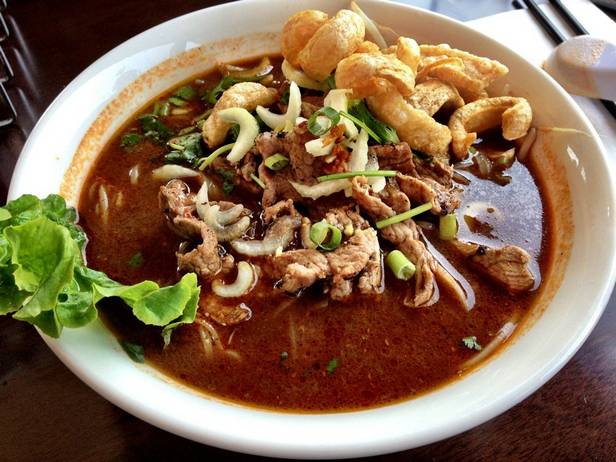
On weekends, Bangkok's canals are especially congested. The waterways that crisscross the Siamese capital transform into a floating market. Long boats sell everything a city dweller needs, from groceries to clothing. After a busy shopping spree, a snack is in order. A variety of exotic dishes are prepared and served from the boats.
The noodles are especially delicious. They can be made with egg or rice, in a thick meat sauce or fish broth. If desired, this delicacy can be topped with bean sprouts, egg, crispy bacon bits, pig's ears, or thin slices of beef.
Price: from 10 to 15 baht.
Fish cakes (Tod Mun Pla Krai)
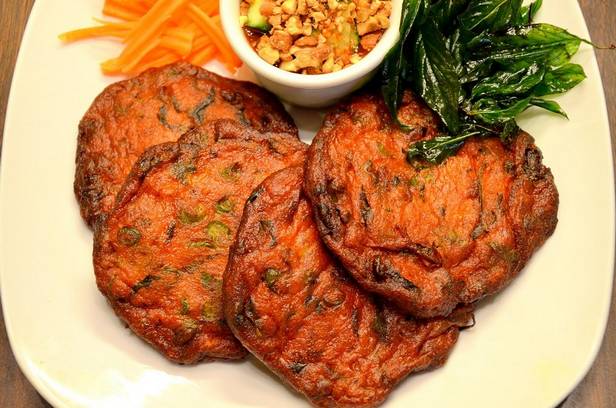
This street delicacy can be eaten on the go. The fish cakes are made from any kind of minced fish, seasoned with curry and kaffir lime leaves, then flattened with the palm of your hand and deep-fried. Tod Mun Pla Krai is served in a convenient plastic container with tomatoes and cucumbers. This delicacy is best eaten with a thin skewer.
Price: from 20 to 30 baht.
Durian
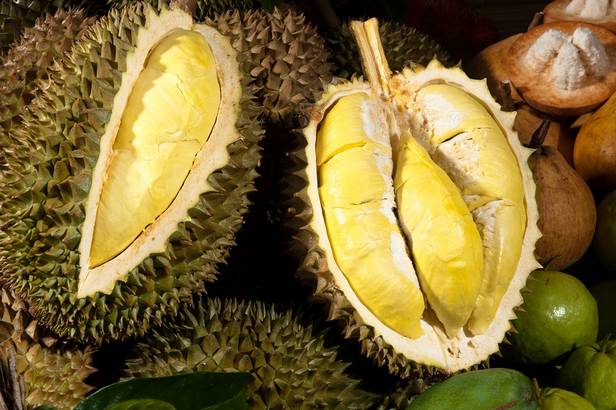
The streets of Bangkok offer a rich variety of fruits, and durian holds a special place. This gift of nature is shaped like a well-worn rugby ball, its green, thick skin covered in sharp spines concealing a creamy yellow interior. Locals call durian the "king of fruits," and for good reason, as it contains a wealth of vitamins, minerals, and other beneficial nutrients. However, there is one drawback: its smell. It is so pungent, sharp, and foul that it can easily be used to repel enemies and other miscreants. Durian is prohibited from being brought into hotels, shopping malls, airplanes, and other crowded places. Due to its early ripening and short shelf life, it is only available in Southeast Asia.
The price is around 400 baht per kilogram.
Mango with Sticky Rice (Khao Niao Mamuang)
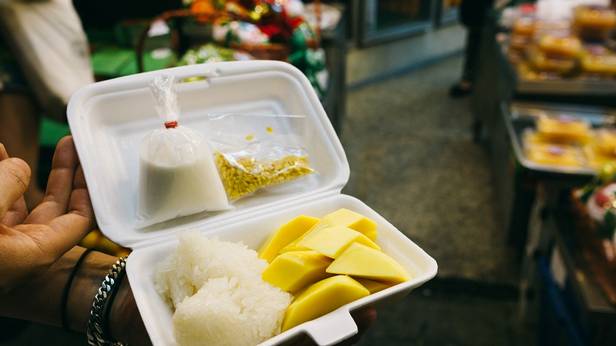
Thailand isn't renowned for its diverse national desserts, but the few offerings available at street cafes and stalls are sure to impress even the most Michelin-starred restaurant snobbish. Khao Niao Mamuang is one of them. Fresh, sweet mango is garnished with salty sticky rice, generously drizzled with coconut milk and sugar syrup.
Price: from 40 to 45 baht.
Recipe:
Sweet dessert made from sticky coconut rice "Ka nyao man"
Pancakes (Roti)
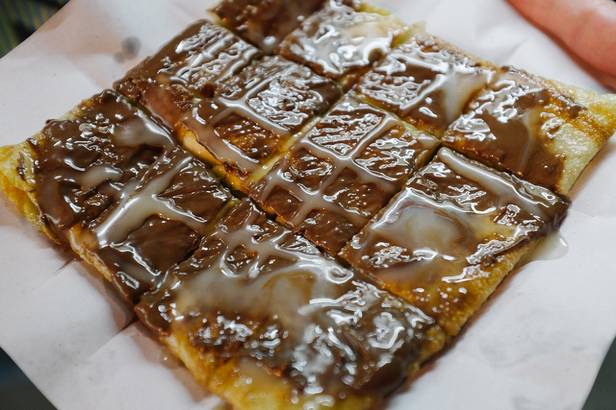
This dish is believed to have originated in Malaysia. It's prepared primarily by Thais, who practice Islam. In your presence, a chef will fry a roti with any sweet filling on a huge frying pan placed on a trolley. The most popular filling is banana. You can enjoy the roti on the go from a paper plate using a bamboo skewer.
The price is within 25 baht.
Papaya Salad (Tom Sum)
This is the most common dish in Bangkok. The stall where you can try it is easily recognized by the heavy mortar in which a tanned woman confidently crushes julienned green papaya with a pestle and a mixture of peppers, palm sugar, and fish sauce. The delicacy is complemented by scarlet tomatoes. Tom Sum has a simultaneously spicy, sour, and sweet flavor. A true explosion for the taste buds.
There are many variations of papaya salads: with the addition of peanuts, seafood, tiny dried shrimp, green beans, etc.
Price: 30 baht.
Roasted Duck (Ped Yang)
Originally prepared in the neighborhoods of Chinatown, this delicious, crispy-skinned duck has since migrated to restaurants, food courts, and street vendors. The bird is marinated in a special marinade, which gives it its distinctive red color and slightly sweet flavor. The finished meat is sliced, served on a plate, drizzled with a special soy sauce, and garnished with rice. Duck pieces are also added to wontons or noodle soup with kale and egg.
Price: from 80 baht.
Omelette with mussels (Hoy Tod)
Although Bangkok is located a considerable distance from the ocean, the city is not short of seafood. Fresh and delicious, it's a staple in every Thai's daily diet. An oyster omelet is a filling street food that takes just minutes to prepare. A generous serving is complemented by fried green beans. Chili pepper is a common, but optional, ingredient in Hoi Tod. Be sure to let the street chef know if you don't like spicy food.
Price: 40 baht.
Tom Yum
Tom Yum soup is a culinary classic served in every Thai restaurant. This delicacy is one of those rare dishes where all flavors are present at once. Palm sugar adds sweetness, lime adds a touch of tartness, fish sauce provides saltiness, and chili pepper adds heat.
The price is about 60 baht.
Tom Yum recipes:
Thai Tom Yum Soup
Hot and sour Thai soup with shrimp "Tom yum kung"
Kebabs
Early in the morning, when Bangkok residents go to work, and in the evening, when tired workers return home, mobile food stalls appear on the streets. These are carts, often converted from motorcycles with sidecars. The passenger seat is transformed into a grill where pork skewers (Moo Ping), fish (Pla Pao), sausages (Sai Krok Isaan), and chicken legs (Kai Yang) are cooked over charcoal. Some food stalls specialize in a single dish, offering a side dish of vegetables and sticky rice, but most offer an unlimited selection at these mobile eateries.
Price: from 5 to 25 baht.
Kebab recipes:
Chicken skewers with spicy Thai salad
Pork kebabs with chili sauce
Thai-style beef skewers with marinated vegetables
Chicken sauté with spicy peanut dipping sauce
Chicken sauté with peanut sauce
Marinated shrimp kebabs
Boat Noodles (Kwai Tiao Rua)
On weekends, Bangkok's canals are especially congested. The waterways that crisscross the Siamese capital transform into a floating market. Long boats sell everything a city dweller needs, from groceries to clothing. After a busy shopping spree, a snack is in order. A variety of exotic dishes are prepared and served from the boats.
The noodles are especially delicious. They can be made with egg or rice, in a thick meat sauce or fish broth. If desired, this delicacy can be topped with bean sprouts, egg, crispy bacon bits, pig's ears, or thin slices of beef.
Price: from 10 to 15 baht.
Fish cakes (Tod Mun Pla Krai)
This street delicacy can be eaten on the go. The fish cakes are made from any kind of minced fish, seasoned with curry and kaffir lime leaves, then flattened with the palm of your hand and deep-fried. Tod Mun Pla Krai is served in a convenient plastic container with tomatoes and cucumbers. This delicacy is best eaten with a thin skewer.
Price: from 20 to 30 baht.
Durian
The streets of Bangkok offer a rich variety of fruits, and durian holds a special place. This gift of nature is shaped like a well-worn rugby ball, its green, thick skin covered in sharp spines concealing a creamy yellow interior. Locals call durian the "king of fruits," and for good reason, as it contains a wealth of vitamins, minerals, and other beneficial nutrients. However, there is one drawback: its smell. It is so pungent, sharp, and foul that it can easily be used to repel enemies and other miscreants. Durian is prohibited from being brought into hotels, shopping malls, airplanes, and other crowded places. Due to its early ripening and short shelf life, it is only available in Southeast Asia.
The price is around 400 baht per kilogram.
Mango with Sticky Rice (Khao Niao Mamuang)
Thailand isn't renowned for its diverse national desserts, but the few offerings available at street cafes and stalls are sure to impress even the most Michelin-starred restaurant snobbish. Khao Niao Mamuang is one of them. Fresh, sweet mango is garnished with salty sticky rice, generously drizzled with coconut milk and sugar syrup.
Price: from 40 to 45 baht.
Recipe:
Sweet dessert made from sticky coconut rice "Ka nyao man"
Pancakes (Roti)
This dish is believed to have originated in Malaysia. It's prepared primarily by Thais, who practice Islam. In your presence, a chef will fry a roti with any sweet filling on a huge frying pan placed on a trolley. The most popular filling is banana. You can enjoy the roti on the go from a paper plate using a bamboo skewer.
The price is within 25 baht.
Author of the article: Olga Bocca "TopCook"
Votes: 1
Categories:
Related articles