Caring for stainless steel cookware
Chefs who truly understand cookware always prefer stainless steel. This type of cookware is stain-resistant and resistant to odors and flavors. It's suitable for any kitchen, although it does require special care.
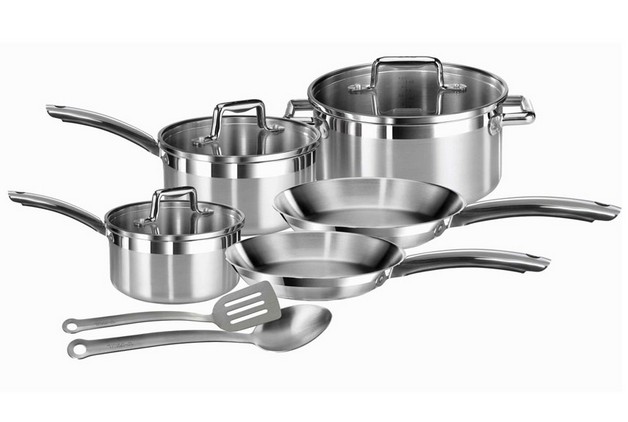
Chefs who truly understand cookware always prefer stainless steel. This type of cookware is stain-resistant and resistant to odors and flavors. It's suitable for any kitchen, although it does require special care.
New dishes
Stainless steel cookware is nonporous, preventing odors and flavors from being absorbed. Unlike cast iron, it doesn't require oil. However, you can still add oil if you're concerned about burning. Like other new cookware, stainless steel pans should be thoroughly washed before first use. Afterward, dry the cookware thoroughly to prevent any residual water from staining.
Cooking
If you decide to add oil to the pan while cooking, do so while the pan is still cold, 1-2 minutes before adding food. If you're cooking in a stainless steel pan, heat the water first and then add salt. Adding salt to cold water can cause stains on the pan. When frying, be careful not to let the oil burn or smoke. Smoking oil indicates that the pan is too hot, which can cause food to stick even to the oil.
Washing
Stainless steel cookware is dishwasher safe, but hand washing will best preserve its pristine appearance. Use laundry soap and hot water, then rinse with clean water and dry thoroughly. Never scrub stainless steel cookware with hard wire wool or other metal objects. This will leave marks and scratches. If burnt-on food cannot be removed with a soft sponge, pour water into the pot or pan containing the burnt food, add 1-2 tablespoons of baking soda, and then bring the water to a boil. After a few minutes, the burnt-on food will loosen naturally.
Cleaning
If stains or streaks appear on your stainless steel cookware, you can clean it with a mixture of baking soda, water, and white vinegar. Rub the stains with this mixture, then rinse the area with soapy water and rinse with clean water. If necessary, you can rinse again with soapy water and rinse. If stainless steel cookware is heated for too long at high heat, a rainbow effect may appear on its surface. This is usually the case with all old cookware; it doesn't pose any health risks, and you can continue using it. However, if you don't like the appearance of your pot or pan, you can clean it with any abrasive dishwashing powder.
New dishes
Stainless steel cookware is nonporous, preventing odors and flavors from being absorbed. Unlike cast iron, it doesn't require oil. However, you can still add oil if you're concerned about burning. Like other new cookware, stainless steel pans should be thoroughly washed before first use. Afterward, dry the cookware thoroughly to prevent any residual water from staining.
Cooking
If you decide to add oil to the pan while cooking, do so while the pan is still cold, 1-2 minutes before adding food. If you're cooking in a stainless steel pan, heat the water first and then add salt. Adding salt to cold water can cause stains on the pan. When frying, be careful not to let the oil burn or smoke. Smoking oil indicates that the pan is too hot, which can cause food to stick even to the oil.
Washing
Stainless steel cookware is dishwasher safe, but hand washing will best preserve its pristine appearance. Use laundry soap and hot water, then rinse with clean water and dry thoroughly. Never scrub stainless steel cookware with hard wire wool or other metal objects. This will leave marks and scratches. If burnt-on food cannot be removed with a soft sponge, pour water into the pot or pan containing the burnt food, add 1-2 tablespoons of baking soda, and then bring the water to a boil. After a few minutes, the burnt-on food will loosen naturally.
Cleaning
If stains or streaks appear on your stainless steel cookware, you can clean it with a mixture of baking soda, water, and white vinegar. Rub the stains with this mixture, then rinse the area with soapy water and rinse with clean water. If necessary, you can rinse again with soapy water and rinse. If stainless steel cookware is heated for too long at high heat, a rainbow effect may appear on its surface. This is usually the case with all old cookware; it doesn't pose any health risks, and you can continue using it. However, if you don't like the appearance of your pot or pan, you can clean it with any abrasive dishwashing powder.
Author: Natalia Semenova
Votes: 1
Categories:
Related articles