Edible insects
This article will teach you about six types of edible insects and why they are beneficial to eat.
While most people living in Europe, Russia, or North America might find the idea of eating an insect completely unappealing, residents of Asia, Africa, and South America consider many insect species to be a true delicacy.
Edible insects are nutritionally little different from crustaceans and mollusks, which humans are not averse to. Both belong to the phylum Arthropoda. People allergic to crayfish, lobsters, crabs, and similar animals are also allergic to insects if they choose to eat them.
Overall, there are several reasons why insects are perfectly acceptable to eat.
Firstly, insects are high in protein and unsaturated fats, making them a good substitute for poultry or fish.
Secondly, physically collecting insects is much easier than caring for livestock.
Thirdly, the demand for protein in developing countries is growing worldwide, and it's hard to find. Citizens of poor countries can't always afford meat, but they can gather their own insects.
Fourthly, insect collecting could provide jobs for the unemployed in developing countries, which is also a big plus.
Let's take a look at what types of insects are most commonly eaten.
1. Beetles
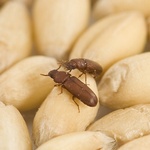
Typically, only the beetle larvae are eaten, not the beetles themselves. For example, in Cameroon, women collecting palm weevil larvaeThey put their ears to the palm tree trunk and listen. Their hearing is so good that they can hear the larvae moving inside the palm tree!

In addition to the palm weevil, they also eat the larvae of water and dung beetles, as well as bark beetles.
In the Netherlands, along with fish and reptiles, some species of food worms are also eaten, namely the larvae of the brown mealworm beetle and the large mealworm beetle.
2. Caterpillars
While some cultures readily eat butterflies and moths, most others prefer only their larvae, or caterpillars. For example, in Mexico, the caterpillars of the agave moth are highly prized by farmers. They are deep-fried or stewed. They are delicious with a spicy sauce or as a filling for tortillaThey are also added to alcoholic drinks, as the caterpillars are believed to improve their flavor.
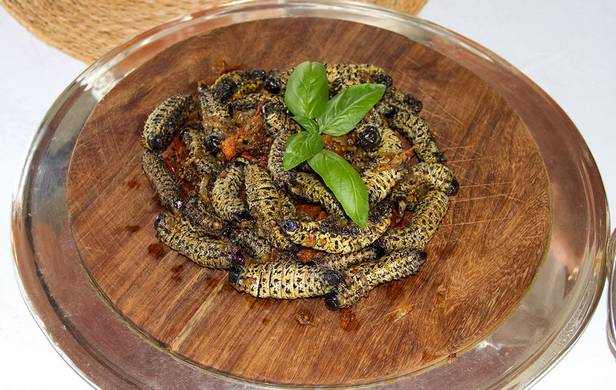
The most popular in the world edible caterpillar - mopaneIt inhabits the mopane forests. The mopane is a vast swath of land that stretches across South Africa, Mozambique, Namibia, Botswana, Angola, and several other countries. More than 9.5 billion caterpillars are collected annually, generating $85 million in sales.
3. Wasps, bees, ants
Ants are very beneficial insects. Not only do they help control agricultural pests, but they also provide significant nutritional value.
The larvae and pupae of the weaver ant are very popular in Asian cuisine, where they are also called ant eggs. In Thailand, they are sold canned! Furthermore, the black weaver ant, native to the subtropics of China, Malaysia, Bangladesh, India, and Sri Lanka, is used as an ingredient in healthy cooking. It is also used in the production of tonics. All of these products can be purchased at Chinese markets.
In Japan, hornet larvae are a delicacy and a valuable commodity, imported specifically from Vietnam and Australia.

Interestingly, the most valuable thing about a bee isn't its honey, but its nutritional value and the amino acids, minerals, and vitamins found within the bee's body itself. With the right approach, bees can be easily kept anywhere on the planet, with the exception, of course, of the coldest regions.
In Thailand, for example, wasps, as well as bee larvae and pupae, are eaten. Bees are highly prized here and fetch quite a high price at markets.
4. Grasshoppers, locusts and crickets
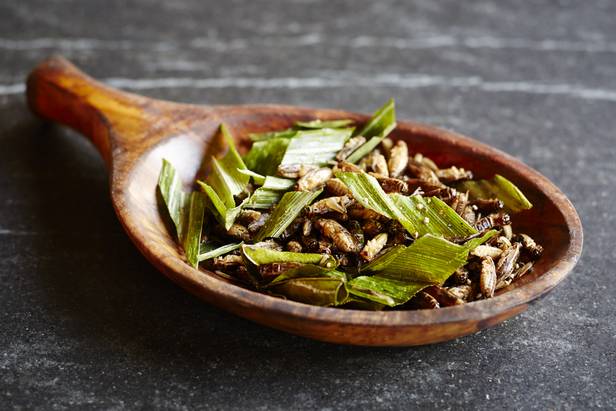
Grasshoppers, surprisingly, are also edible. The vast majority of the 80 species of grasshoppers found worldwide are edible. In African countries, they are sold along the roads, both fresh and cooked. In Mexico, there is chapulines – edible cricket, which is a popular food throughout Latin America. It is typically peeled and pan-fried with lemon, garlic, and salt.

Locusts are eaten in Africa and the Middle East. Locusts are known to be gregarious insects. A swarm of locusts is very easy to catch. Because they constantly migrate, they can only be caught at certain times of the year. Edible locust species include brown, red, and dessert locusts. Because locusts are pests, they are often poisoned with organophosphate pesticides. Pesticide-poisoned locusts were once collected in Kuwait. Naturally, such locusts are no longer suitable for consumption.
Grasshoppers and locusts should be collected early in the morning because they are cold-blooded and cannot move when the mornings are cold.
Attempts were made to breed crickets on farms, but this failed because they have their own life cycles. Therefore, only two species are used commercially. Cambodians claim that wild-caught crickets taste better than those raised on farms. In China, crickets are not only eaten but also kept as pets, and cricket fights are held, where bets are placed.
5. Cicadas
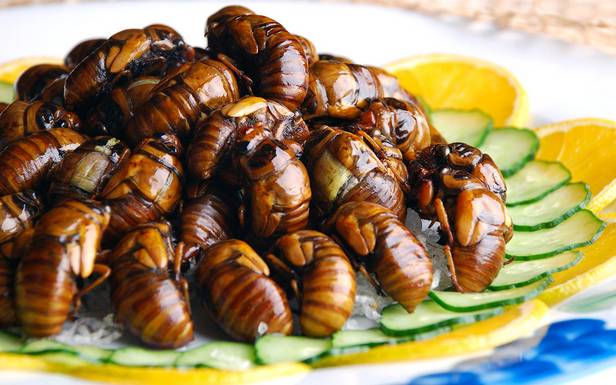
Cicadas inhabit the United States, southern Russia, and several other countries. In the spring, these unusual insects emerge from the ground, where they spent 17 years feeding on tree sap. Because cicadas feed on plants, they themselves acquire the flavor of plants, specifically asparagus. They are boiled or fried, and also used as a filling for pies, cakes, and cookies.
6. Bedbugs
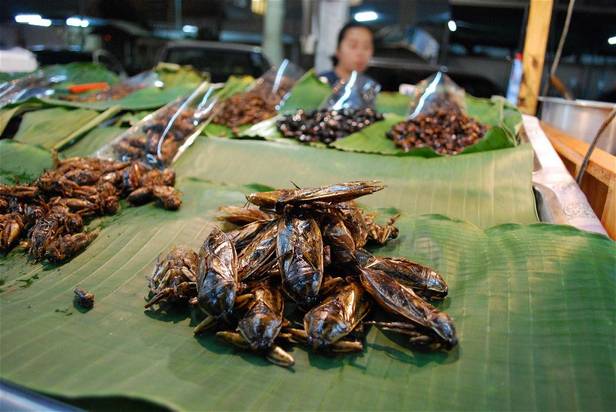
Bedbugs are bad because they emit an unpleasant odor. But this doesn't stop them from being eaten. In African countries, they are fried and also used to extract oil, which is used to flavor food.
It's not garden bugs, but aquatic bugs that are primarily used as food. In Mexico, for example, several species of aquatic bugs are used to produce a product called Mexican caviar. Some of these bugs are caught, others are farmed.
If you haven't tried insects yet but are planning to visit the countries and regions mentioned above, you might want to try them there. After all, only edible insects are eaten, and they're prepared with oil, spices, and herbs. Delicious, in a word!
Edible insects are nutritionally little different from crustaceans and mollusks, which humans are not averse to. Both belong to the phylum Arthropoda. People allergic to crayfish, lobsters, crabs, and similar animals are also allergic to insects if they choose to eat them.
Overall, there are several reasons why insects are perfectly acceptable to eat.
Firstly, insects are high in protein and unsaturated fats, making them a good substitute for poultry or fish.
Secondly, physically collecting insects is much easier than caring for livestock.
Thirdly, the demand for protein in developing countries is growing worldwide, and it's hard to find. Citizens of poor countries can't always afford meat, but they can gather their own insects.
Fourthly, insect collecting could provide jobs for the unemployed in developing countries, which is also a big plus.
Let's take a look at what types of insects are most commonly eaten.
1. Beetles
Typically, only the beetle larvae are eaten, not the beetles themselves. For example, in Cameroon, women collecting palm weevil larvaeThey put their ears to the palm tree trunk and listen. Their hearing is so good that they can hear the larvae moving inside the palm tree!
In addition to the palm weevil, they also eat the larvae of water and dung beetles, as well as bark beetles.
In the Netherlands, along with fish and reptiles, some species of food worms are also eaten, namely the larvae of the brown mealworm beetle and the large mealworm beetle.
2. Caterpillars
While some cultures readily eat butterflies and moths, most others prefer only their larvae, or caterpillars. For example, in Mexico, the caterpillars of the agave moth are highly prized by farmers. They are deep-fried or stewed. They are delicious with a spicy sauce or as a filling for tortillaThey are also added to alcoholic drinks, as the caterpillars are believed to improve their flavor.
The most popular in the world edible caterpillar - mopaneIt inhabits the mopane forests. The mopane is a vast swath of land that stretches across South Africa, Mozambique, Namibia, Botswana, Angola, and several other countries. More than 9.5 billion caterpillars are collected annually, generating $85 million in sales.
3. Wasps, bees, ants
Ants are very beneficial insects. Not only do they help control agricultural pests, but they also provide significant nutritional value.
The larvae and pupae of the weaver ant are very popular in Asian cuisine, where they are also called ant eggs. In Thailand, they are sold canned! Furthermore, the black weaver ant, native to the subtropics of China, Malaysia, Bangladesh, India, and Sri Lanka, is used as an ingredient in healthy cooking. It is also used in the production of tonics. All of these products can be purchased at Chinese markets.
In Japan, hornet larvae are a delicacy and a valuable commodity, imported specifically from Vietnam and Australia.
Interestingly, the most valuable thing about a bee isn't its honey, but its nutritional value and the amino acids, minerals, and vitamins found within the bee's body itself. With the right approach, bees can be easily kept anywhere on the planet, with the exception, of course, of the coldest regions.
In Thailand, for example, wasps, as well as bee larvae and pupae, are eaten. Bees are highly prized here and fetch quite a high price at markets.
4. Grasshoppers, locusts and crickets
Grasshoppers, surprisingly, are also edible. The vast majority of the 80 species of grasshoppers found worldwide are edible. In African countries, they are sold along the roads, both fresh and cooked. In Mexico, there is chapulines – edible cricket, which is a popular food throughout Latin America. It is typically peeled and pan-fried with lemon, garlic, and salt.
Locusts are eaten in Africa and the Middle East. Locusts are known to be gregarious insects. A swarm of locusts is very easy to catch. Because they constantly migrate, they can only be caught at certain times of the year. Edible locust species include brown, red, and dessert locusts. Because locusts are pests, they are often poisoned with organophosphate pesticides. Pesticide-poisoned locusts were once collected in Kuwait. Naturally, such locusts are no longer suitable for consumption.
Grasshoppers and locusts should be collected early in the morning because they are cold-blooded and cannot move when the mornings are cold.
Attempts were made to breed crickets on farms, but this failed because they have their own life cycles. Therefore, only two species are used commercially. Cambodians claim that wild-caught crickets taste better than those raised on farms. In China, crickets are not only eaten but also kept as pets, and cricket fights are held, where bets are placed.
5. Cicadas
Cicadas inhabit the United States, southern Russia, and several other countries. In the spring, these unusual insects emerge from the ground, where they spent 17 years feeding on tree sap. Because cicadas feed on plants, they themselves acquire the flavor of plants, specifically asparagus. They are boiled or fried, and also used as a filling for pies, cakes, and cookies.
6. Bedbugs
Bedbugs are bad because they emit an unpleasant odor. But this doesn't stop them from being eaten. In African countries, they are fried and also used to extract oil, which is used to flavor food.
It's not garden bugs, but aquatic bugs that are primarily used as food. In Mexico, for example, several species of aquatic bugs are used to produce a product called Mexican caviar. Some of these bugs are caught, others are farmed.
If you haven't tried insects yet but are planning to visit the countries and regions mentioned above, you might want to try them there. After all, only edible insects are eaten, and they're prepared with oil, spices, and herbs. Delicious, in a word!
Author of the article: Natalia Semenova "TopCook"
Votes: 2
Categories:
Related articles