Benefits of potatoes
What's the most important food we eat every day? Of course, it's potatoes. Potatoes are like bread. They're an essential ingredient that can be used to create a wide variety of dishes.
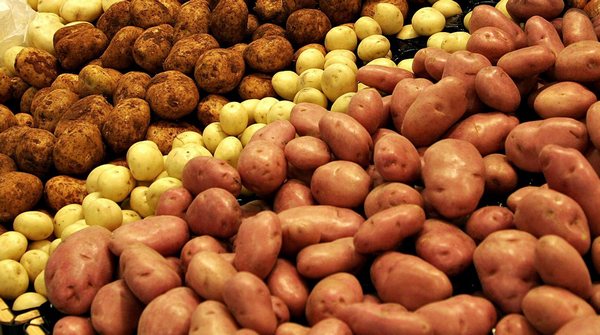
What's the most important food we eat every day? Of course, it's potatoes. Potatoes are like bread. They're an essential ingredient that can be used to create a wide variety of dishes.
But their importance also lies in their nutritional value. Potatoes contain protein, which has a very high biological value—it contains essential amino acids. Potatoes are also rich in vitamins: A, B, P, PP, and C. Vitamins are lost during storage and cooking, which is a natural process. Therefore, it's healthier to eat fresh potatoes.
Potatoes are also beneficial because they contain organic acids and dietary fiber. However, they contain a substance called solanine, so they should not be eaten raw. Consuming large amounts of this substance can lead to food poisoning. Potatoes also have healing properties due to their potassium content, as they remove sodium chloride and water from the body, improving metabolism.
Potato juice treats stomach and intestinal ailments, and steam is used to prevent and treat colds. It is also used for cosmetic purposes, removing oily shine from the face and leaving skin clear.
Boiled potatoes with warm milk and an egg can also be applied to the face to create a good cleansing mask at home.
There's a lot to talk about potato varieties, as there are so many of them. They are classified by maturity time: early, mid-early, mid-season, and late. Potatoes can grow in a variety of soils and adapt to a wide range of conditions. Potatoes are now grown all over the world in various climates and zones.
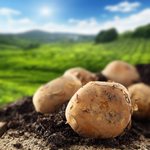
Potatoes are generally planted in medium-sized plants with sprouts. If the potatoes are too large, they can even be divided in half and planted, but they must be sprouted, otherwise they won't grow. Potatoes are planted in rows and hilled up, creating mounds to help guide digging and weeding without damaging the potato plant itself.
After harvesting, the potatoes are first sun-dried for a couple of days, cleaned of soil, and then stored for several days at a temperature of 12-15 degrees Celsius (54-59 degrees Fahrenheit). This period is called the curing period and lasts about two weeks. After this curing period, the temperature is lowered to 8 degrees Celsius (46 degrees Fahrenheit) and stored at this temperature for another month. Finally, they are moved to a cellar where the air temperature should be 2-3 degrees Celsius (36-38 degrees Fahrenheit).
But their importance also lies in their nutritional value. Potatoes contain protein, which has a very high biological value—it contains essential amino acids. Potatoes are also rich in vitamins: A, B, P, PP, and C. Vitamins are lost during storage and cooking, which is a natural process. Therefore, it's healthier to eat fresh potatoes.
Potatoes are also beneficial because they contain organic acids and dietary fiber. However, they contain a substance called solanine, so they should not be eaten raw. Consuming large amounts of this substance can lead to food poisoning. Potatoes also have healing properties due to their potassium content, as they remove sodium chloride and water from the body, improving metabolism.
Potato juice treats stomach and intestinal ailments, and steam is used to prevent and treat colds. It is also used for cosmetic purposes, removing oily shine from the face and leaving skin clear.
Boiled potatoes with warm milk and an egg can also be applied to the face to create a good cleansing mask at home.
There's a lot to talk about potato varieties, as there are so many of them. They are classified by maturity time: early, mid-early, mid-season, and late. Potatoes can grow in a variety of soils and adapt to a wide range of conditions. Potatoes are now grown all over the world in various climates and zones.
Potatoes are generally planted in medium-sized plants with sprouts. If the potatoes are too large, they can even be divided in half and planted, but they must be sprouted, otherwise they won't grow. Potatoes are planted in rows and hilled up, creating mounds to help guide digging and weeding without damaging the potato plant itself.
After harvesting, the potatoes are first sun-dried for a couple of days, cleaned of soil, and then stored for several days at a temperature of 12-15 degrees Celsius (54-59 degrees Fahrenheit). This period is called the curing period and lasts about two weeks. After this curing period, the temperature is lowered to 8 degrees Celsius (46 degrees Fahrenheit) and stored at this temperature for another month. Finally, they are moved to a cellar where the air temperature should be 2-3 degrees Celsius (36-38 degrees Fahrenheit).
Votes: 1
All recipes with potatoes
Categories:
Related articles