Bibingka
Votes: 1

Time: 4 hours.
Complexity: easily
Servings: 6
Complexity: easily
Servings: 6
Nutritional value per serving:
Calories 650, total fat 26 G., saturated fats 19 G., proteins 11 G., carbohydrates 97 G., fiber 3 G., cholesterol 90 mg, sodium 307 mg, sugar 45 G.
Calories 650, total fat 26 G., saturated fats 19 G., proteins 11 G., carbohydrates 97 G., fiber 3 G., cholesterol 90 mg, sodium 307 mg, sugar 45 G.
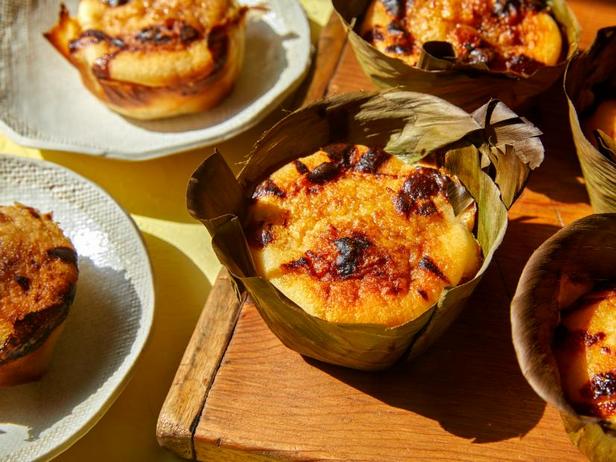
This classic Filipino rice dessert, baked in banana leaves, is often made for holidays. This simplified version of the yeast dough combines Thai rice flour with glutinous rice flour, resulting in a tender and moist dessert. It's important to let the dough rise well to create a light, airy texture. This recipe yields six muffin-shaped bibingka, but they can also be baked in traditional mamon tins. The bibingka are topped with edam cheese and coconut sugar, which creates a crispy crust.
The recipes use measuring containers with the following volumes:
1 glass (st.) - 250 ml.
3/4 cup (st.) - 180 ml.
2/3 cup (st.) - 160 ml.
1/2 cup (st.) - 125 ml.
1/3 cup (st.) - 80 ml.
1/4 cup (st.) - 60 ml.
1 tablespoon (tbsp) - 15 ml.
1 teaspoon (tsp) - 5 ml.
1/5 teaspoon (tsp) - 1 ml.
1 glass (st.) - 250 ml.
3/4 cup (st.) - 180 ml.
2/3 cup (st.) - 160 ml.
1/2 cup (st.) - 125 ml.
1/3 cup (st.) - 80 ml.
1/4 cup (st.) - 60 ml.
1 tablespoon (tbsp) - 15 ml.
1 teaspoon (tsp) - 5 ml.
1/5 teaspoon (tsp) - 1 ml.
Ingredients for the recipe:
- 1/4 cup warm water
- 1 teaspoon active dry yeast
- 1 tbsp. + 1/8 tsp. granulated sugar
- 1 3/4 cups Thai rice flour, preferably Erawan
- 1/4 cup mochiko (glutinous rice flour)
- 0.5 tsp coarse salt
- 1 can (400 g) coconut milk
- 1 package (450 g) frozen banana leaves (defrosted) or 3 fresh banana leaves
- 2 large eggs, beaten
- 90 g Edam cheese, coarsely grated
- 3 tablespoons melted unsalted butter
- 1 tbsp. l. coconut sugar
We recommend






Recipes with similar ingredients: rice flour, coconut milk, coconut sugar, Edam cheese
Cooking the dish according to the recipe:
- Combine warm water, yeast, and 1/8 teaspoon sugar in a small bowl. Stir and let the yeast foam for about 5 minutes. Set aside.
- In a large bowl, combine the rice flour, salt, and the remaining 1 cup of sugar. Add the yeast mixture and coconut milk. Knead until smooth. Place the bowl in a warm place until the dough doubles in size, about 3 hours. It may take longer depending on the temperature.
- Wipe both sides of each banana leaf with a damp towel, removing any dirt. Draw 6 7-inch (17.5 cm) circles on the leaves (outline a 7-inch (17.5 cm) bowl), avoiding any holes or tears. Heat each circle directly over low heat or with a blowtorch until pliable and slightly darkened, about 10 seconds per side. Place each circle in a 6-cup muffin tin and set aside.
- Preheat oven to 200°C.
- Once the batter is light and bubbly, beat in the eggs. Fill each muffin tin a little over three-quarters full (no more than 3/4 cup per serving). Top each serving with 2 tablespoons of grated Edam.
- Bake until a toothpick inserted into the center of each bibingka comes out clean, 20–25 minutes. Remove the broiler from the oven and reheat. Brush the top of each bibingka with melted butter, then sprinkle each with 1/2 teaspoon coconut sugar. Bake on the middle rack with the oven door open, moving the muffin pan constantly, until the tops are golden brown, 1–2 minutes.
- Let cool in the pan for 5 minutes, then transfer each bibingka to a wire rack and let cool completely. Bibingka can be served at room temperature, but are best served warm. They can be refrigerated in a tightly sealed container for up to 5 days, or reheated in the microwave before serving.
Categories: