Dyeing Easter eggs with natural dyes
Votes: 2

Time: 40 min.
Complexity: easily
Quantity: 12 pcs.
Complexity: easily
Quantity: 12 pcs.
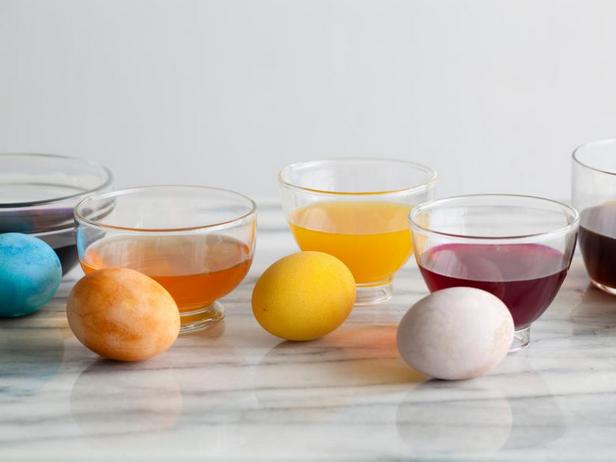
Dyeing Easter eggs with natural dyes is not only harmless but also a centuries-old tradition that remains relevant even with the advent of modern food coloring. Various foods, vegetables, and fruits with brightly pigmented ingredients are used for dyeing. Beets, onion skins, turmeric, red cabbage, and coffee are just a few examples. Each ingredient is boiled separately for 30 minutes, and to ensure the dye lasts longer, a little vinegar is added to the dyed broth. Eggs dyed with natural dyes are certainly not as vibrant, but even in their pastel shades, they look charming on the holiday table.
The recipes use measuring containers with the following volumes:
1 glass (st.) - 250 ml.
3/4 cup (st.) - 180 ml.
2/3 cup (st.) - 160 ml.
1/2 cup (st.) - 125 ml.
1/3 cup (st.) - 80 ml.
1/4 cup (st.) - 60 ml.
1 tablespoon (tbsp) - 15 ml.
1 teaspoon (tsp) - 5 ml.
1/5 teaspoon (tsp) - 1 ml.
1 glass (st.) - 250 ml.
3/4 cup (st.) - 180 ml.
2/3 cup (st.) - 160 ml.
1/2 cup (st.) - 125 ml.
1/3 cup (st.) - 80 ml.
1/4 cup (st.) - 60 ml.
1 tablespoon (tbsp) - 15 ml.
1 teaspoon (tsp) - 5 ml.
1/5 teaspoon (tsp) - 1 ml.
Ingredients for the recipe:
Red
- 1 kg beetroot, peeled and diced
Yellow/bronze
- 0.5 kg onion peel
Yellow/orange
- 1.5 cups (55 g) turmeric
Violet
- 2 small heads red cabbage, shredded
Brown
- 1 (6 cups) pot of strong coffee
- Distilled white vinegar
We recommend







Recipes with similar ingredients: beet, red cabbage, onions, turmeric, coffee
Cooking the dish according to the recipe:
For coffee
Brew the coffee. Cool to room temperature. Add 1/4 cup of distilled white vinegar, add hard-boiled eggs, and refrigerate overnight.For other dyes
Place one ingredient in a 5-quart saucepan. Add 4 liters of water, bring to a boil, and simmer for 30 minutes, or until the color is very rich. Cool to room temperature and strain. Add 1/4 cup of distilled white vinegar, then place hard-boiled eggs into each dye. Refrigerate overnight.
Categories:
Similar recipes