Tteokguk

Complexity: average
Servings: 6
Calories 1190, total fat 45 G., saturated fats 16 G., proteins 46 G., carbohydrates 147 G., fiber 9 G., cholesterol 235 mg, sodium 1011 mg, sugar 4 G.
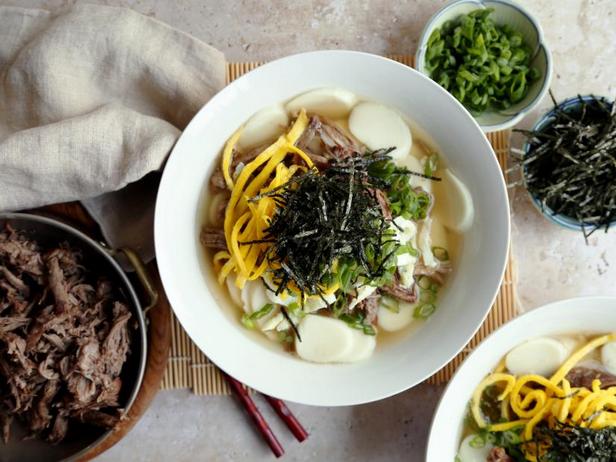
This rice cake soup is eaten year-round in Korea, but is especially popular during Seolnal, the Korean New Year. The rice cakes (tteok) themselves embody the main themes of the holiday: hope for vitality, kindness, and prosperity in the new year. Their white color symbolizes longevity and purity, and their shape, reminiscent of ancient Korean coins, symbolizes wealth. The broth for tteokguk is usually made with beef (marrow bones or, as in this recipe, brisket). It's best to serve the dish immediately, as the rice cakes can lose their shape and texture if left in the broth for too long. To make things easier, you can make the broth and prepare the side dishes a day ahead. All you have to do is simmer the tteok in the broth and garnish the soup before serving. If you prefer a heartier soup, you can add frozen store-bought dumplings to the broth to create a thick tteokmandguk.
1 glass (st.) - 250 ml.
3/4 cup (st.) - 180 ml.
2/3 cup (st.) - 160 ml.
1/2 cup (st.) - 125 ml.
1/3 cup (st.) - 80 ml.
1/4 cup (st.) - 60 ml.
1 tablespoon (tbsp) - 15 ml.
1 teaspoon (tsp) - 5 ml.
1/5 teaspoon (tsp) - 1 ml.
Ingredients for the recipe:
Bouillon
- Two squares (12 cm) of dashima (kombu)
- 900 gr. lean beef brisket
- 6 green onions
- 2 heads of garlic, cut in half horizontally
- 2 onions, unpeeled, cut in half
- 2 teaspoons gukganjang (Korean soy sauce for soup)
Brisket Seasoning
- 1 tbsp sesame oil + extra for drizzling
- 2 teaspoons gukganjang (Korean soy sauce for soup)
- 1.5 tsp fish sauce
- 2 cloves garlic, crushed
Soup
- 3 large eggs, separate the whites from the yolks
- 1 tbsp. canola oil or other neutral vegetable oil
- 1 package (1 kg) sliced rice cakes (tteok)
- 3 green onions, dark green parts only, sliced diagonally
- 4 packages of 20g fried seaweed leaves, cut into thin strips
We recommend






Cooking the dish according to the recipe:
- Bouillon:
In a large saucepan, cover the dashima with 4.5 liters (18 cups) of cold water. Let it sit until the dashima has doubled in size and the water has a slightly yellow-green tint, about 30 minutes. Bring the mixture to a boil over medium-high heat; cook until the dashima begins to foam around the edges, 2–3 minutes. Discard the dashima. - Add the brisket, green onions, garlic, and onion to the pot. Bring the liquid back to a boil, reduce the heat to medium-low, and simmer, covered, at a gentle simmer (until no more than 2-3 bubbles appear on the surface), skimming off any foam with a ladle every 30 minutes, until the broth has reduced slightly and darkened, and the brisket is easily flaked but not falling apart, about 2 hours and 15 minutes. Remove the brisket from the broth and set it aside on a plate to cool.
- Using a slotted spoon or sieve, remove the vegetables from the broth and discard. Add the gukganjang and season with salt.
- Season the brisket:
Once the brisket has cooled sufficiently, cut it in half against the grain and shred the meat into small pieces. Drizzle the beef with sesame oil, gukganjang, fish sauce, and rub with garlic. - If you're not making the soup right away, let the broth cool completely, then pour it into a container (or leave it in the saucepan), seal tightly, and refrigerate overnight. Any remaining fat will solidify on the surface and can be skimmed off with a spoon. Place the brisket in the container, seal tightly, and refrigerate until ready to use.
Note
You can cook the broth and brisket a day ahead, cool them, and refrigerate them separately. - Soup:
Heat the broth over low heat. Place the egg yolks and whites in separate medium bowls, season lightly with salt, and whisk gently. - In an 8-inch (20 cm) nonstick frying pan, heat 1 teaspoon of canola oil over medium-high heat. Pour in half of the egg whites and swirl the pan until the egg coats the entire surface and is set, then continue cooking until the edges begin to dry and pull away from the pan, about 1 minute. The egg should not be completely browned. Carefully turn it over to avoid breaking it, and cook for another 1 minute. Transfer to a plate or cutting board to cool. Repeat with the remaining egg whites, adding 1 teaspoon of oil at a time, then fry the yolks in the same manner. When the egg pancakes have cooled, roll each one up and cut into very thin strips. Set aside.
- Place the rice dumplings in a large bowl and cover with cold water. Set the bowl aside for about 10 minutes, then separate the stuck-together dumplings.
- Increase the heat under the broth and bring to a boil. Add half of the seasoned pork belly. Drain the rice cakes and add them to the pan. Cook until the tteok are soft, chewy, and pliable, 2–3 minutes. Be careful not to overcook them. Taste and add more salt if needed.
- Ladle the soup into bowls and top generously with the brisket, egg strips, green onions, and crispy seaweed, making sure the seaweed sits on top of the other garnishes to prevent it from getting soggy. Drizzle with sesame oil. Serve immediately.
Categories: