Bitter melon tea
There's a plant called bitter melon (momordica), which produces a delicious and healthy tea. You'll learn about it in this article.

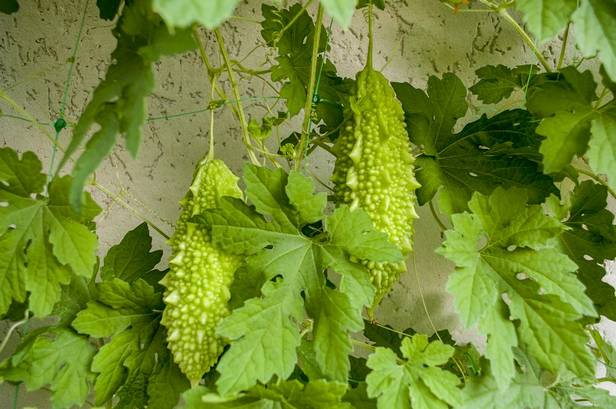
Momordica charantica, or bitter melon, is a climbing plant with green fruits that is grown in Asia, in the Middle East, and South America. Its fruits and leaves are considered healthy and are used to make tea.
Preparation of raw materials
If you decide to prepare the leaves for tea, you'll need to thoroughly dry them first. This can take anywhere from a few days to a week. Once the leaves are completely dry, store them in an airtight tin. The berries can be added to the tea fresh or pre-dried.
Making tea
1. Wash and chop the leaves.
2. Pour 2 cups of boiling water over the chopped leaves.
3. Boil the water with the leaves for 15 minutes, without covering the teapot with a lid.
4. Let the tea cool slightly, then strain it.
5. The resulting decoction can be divided into 3 parts and drunk 3 times a day.
Benefits of Bitter Melon Tea
– Asians have long used Momordica charantica tea to treat diabetes.
Tea stimulates the digestive tract, so it's recommended for those with dyspepsia and digestive issues. However, it's contraindicated for those with stomach or intestinal ulcers or heartburn.
Since ancient times, bitter melon has been used to treat malaria. Research has confirmed the plant's antimalarial properties.
– Scientists have also proven that the plant contains compounds that have a beneficial effect on the body in the treatment of AIDS.
– They say that bitter melon also helps in the treatment of cancer, but there is no scientific evidence to support this yet.
– Bitter melon tea regulates metabolism.
– The fruits and leaves of the plant are rich in nutrients such as iron, calcium, phosphorus and vitamin B.
– According to some studies, Momordica charantica leaf extract helps reduce hemorrhoids.
The plant's leaves are good for treating coughs and as an antipyretic. They can also be brewed to get rid of roundworms.
– The plant helps treat infertility in women and alleviates liver problems.
– Since bitter melon has good antimicrobial properties, an infusion of its leaves is good to use for treating infected wounds.
Despite its many benefits, bitter melon tea also has some contraindications. These have been poorly studied, and research into this plant and its beverage is ongoing.
Preparation of raw materials
If you decide to prepare the leaves for tea, you'll need to thoroughly dry them first. This can take anywhere from a few days to a week. Once the leaves are completely dry, store them in an airtight tin. The berries can be added to the tea fresh or pre-dried.
Making tea
1. Wash and chop the leaves.
2. Pour 2 cups of boiling water over the chopped leaves.
3. Boil the water with the leaves for 15 minutes, without covering the teapot with a lid.
4. Let the tea cool slightly, then strain it.
5. The resulting decoction can be divided into 3 parts and drunk 3 times a day.
Benefits of Bitter Melon Tea
– Asians have long used Momordica charantica tea to treat diabetes.
Tea stimulates the digestive tract, so it's recommended for those with dyspepsia and digestive issues. However, it's contraindicated for those with stomach or intestinal ulcers or heartburn.
Since ancient times, bitter melon has been used to treat malaria. Research has confirmed the plant's antimalarial properties.
– Scientists have also proven that the plant contains compounds that have a beneficial effect on the body in the treatment of AIDS.
– They say that bitter melon also helps in the treatment of cancer, but there is no scientific evidence to support this yet.
– Bitter melon tea regulates metabolism.
– The fruits and leaves of the plant are rich in nutrients such as iron, calcium, phosphorus and vitamin B.
– According to some studies, Momordica charantica leaf extract helps reduce hemorrhoids.
The plant's leaves are good for treating coughs and as an antipyretic. They can also be brewed to get rid of roundworms.
– The plant helps treat infertility in women and alleviates liver problems.
– Since bitter melon has good antimicrobial properties, an infusion of its leaves is good to use for treating infected wounds.
Despite its many benefits, bitter melon tea also has some contraindications. These have been poorly studied, and research into this plant and its beverage is ongoing.
Translation by: Natalia Semenova "TopCook"
Votes: 1
Categories:
Related articles