How to clean artichokes
Votes: 7

Time: 30 min.
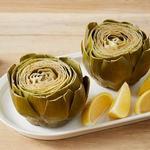
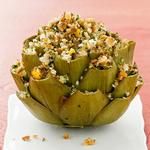
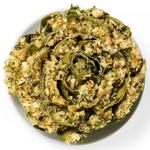
Artichokes have been eaten since ancient Roman times. Their blossoms require warmth, requiring large, well-lit, and wind-protected areas to grow. Artichoke flowers are considered a healthy dietary food, containing the trace elements magnesium, calcium, and vitamins C, B, and E. It's best to pick artichokes in the spring; if the buds are unevenly colored and the petals are dried out, the fruit will be less edible. The juicy petals, which open as the outer petals peel away, are tough and almost woody, are edible, but these leaves are also worth examining; they are softer near the base. Artichoke blossoms can be steamed, grilled, marinated, and stuffed. Artichoke leaves are also great for adding to salads.
The recipes use measuring containers with the following volumes:
1 glass (st.) - 250 ml.
3/4 cup (st.) - 180 ml.
2/3 cup (st.) - 160 ml.
1/2 cup (st.) - 125 ml.
1/3 cup (st.) - 80 ml.
1/4 cup (st.) - 60 ml.
1 tablespoon (tbsp) - 15 ml.
1 teaspoon (tsp) - 5 ml.
1/5 teaspoon (tsp) - 1 ml.
1 glass (st.) - 250 ml.
3/4 cup (st.) - 180 ml.
2/3 cup (st.) - 160 ml.
1/2 cup (st.) - 125 ml.
1/3 cup (st.) - 80 ml.
1/4 cup (st.) - 60 ml.
1 tablespoon (tbsp) - 15 ml.
1 teaspoon (tsp) - 5 ml.
1/5 teaspoon (tsp) - 1 ml.
Ingredients for the recipe:
- Artichoke
- Lemon
We recommend







Recipes with similar ingredients: Artichokes
Cooking the dish according to the recipe:
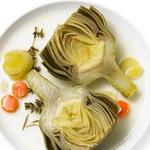
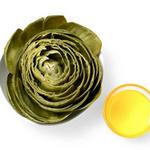
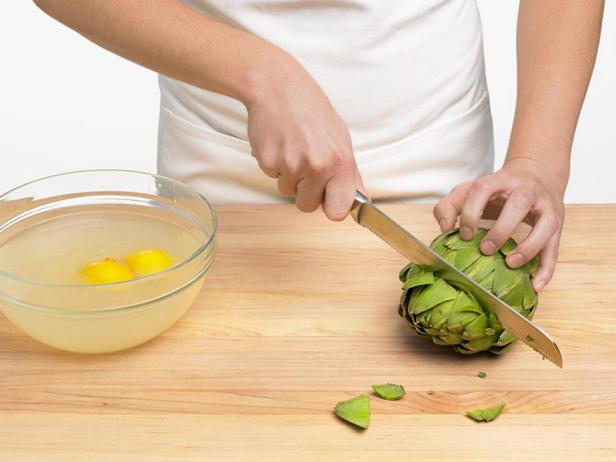
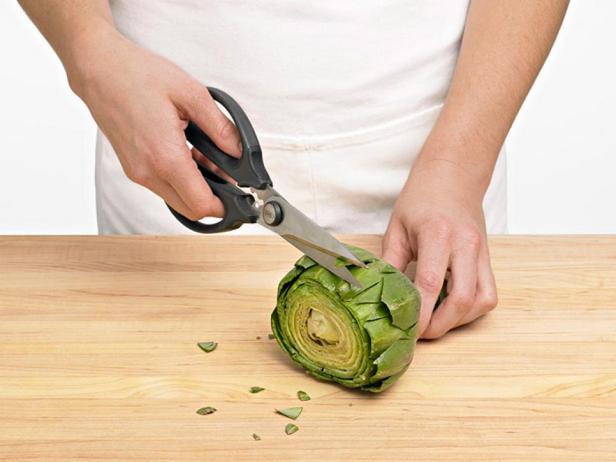
- Work with one artichoke at a time, using a serrated knife and scissors. Place a bowl of water in front of you, squeeze the lemon juice from half a lemon, and drop the lemon into the water. Cut off the top of the artichoke by 2.5 cm.
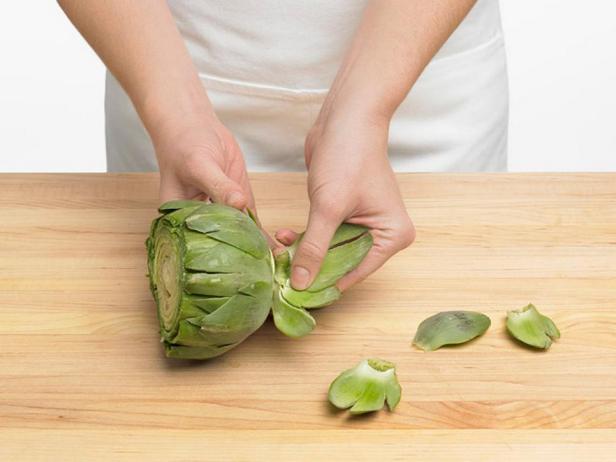
- Cut the tough leaves to the diameter of the artichoke.
- Look at the bud and cut off the dry ends.
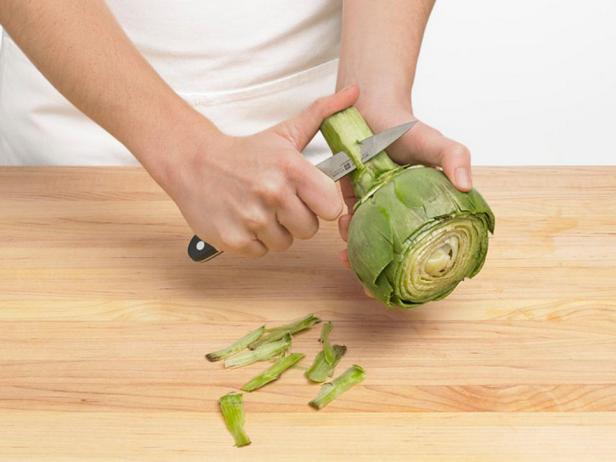
- Peel the stems with a knife or vegetable peeler. Rub the cut ends with lemon juice, place the artichoke in lemon water, and then proceed with the rest.
How to eat an artichoke
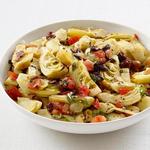
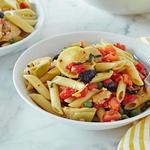
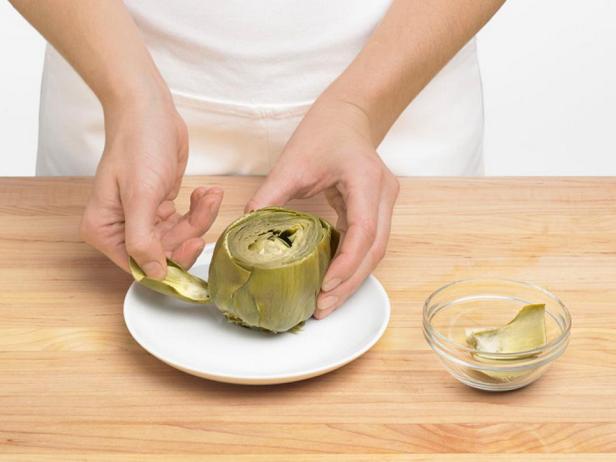
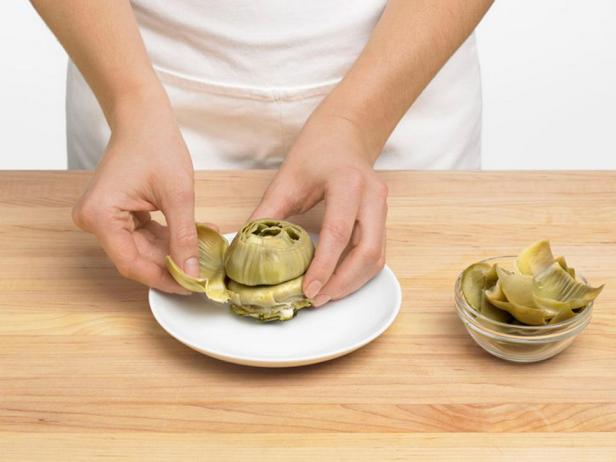
Steam it.- Remove all the leaves from the stalk and use them to make a salad.
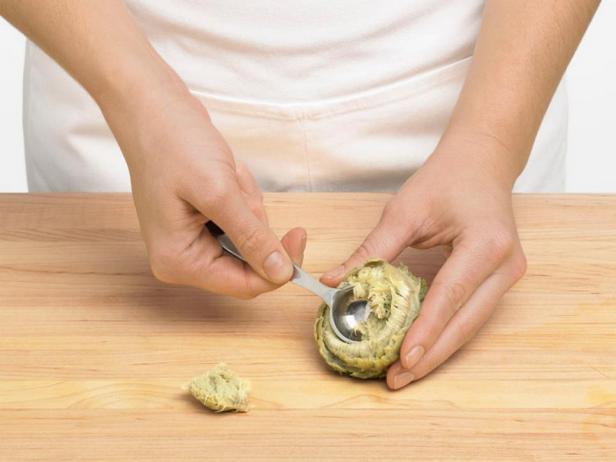
- Clean out the inedible part.
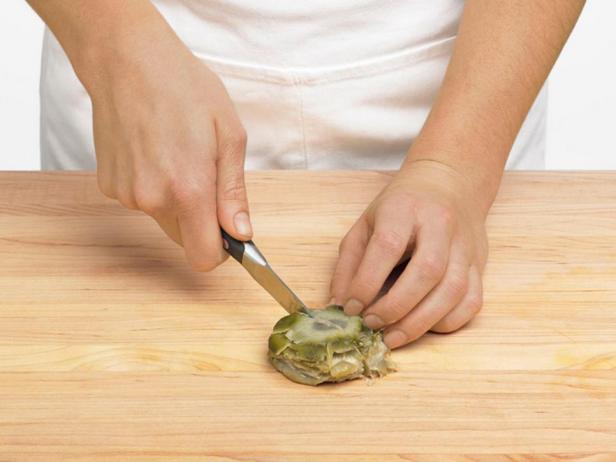
- Cut the stalk into pieces and add to the salad.
Categories:
Similar recipes