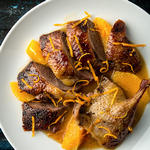
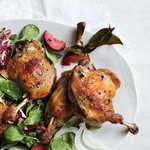
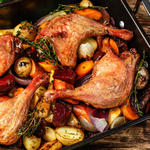
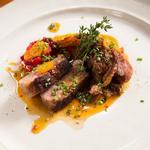
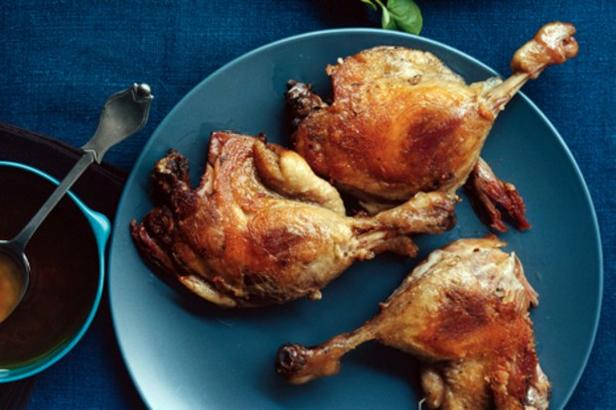
Duck leg confit
Votes: 4

Time: 24 hours.
Complexity: easily
Servings: 6
Complexity: easily
Servings: 6
Confit is a French method of cooking meat in a large amount of fat, allowing it to be stored for a long time. This method has been used for preserving meat since ancient times, before refrigeration, and is still quite popular today. Duck is most often cooked in confit. Rub the duck legs with a herb marinade with coarse salt and marinate for 24 hours. This allows the salt to draw out excess water, improving the shelf life. Then simmer them in the duck fat at a low temperature for several hours. The finished confit can be stored in the refrigerator for several months, and if needed, the legs can be removed from the fat and pan-fried until crispy.
The recipes use measuring containers with the following volumes:
1 glass (st.) - 250 ml.
3/4 cup (st.) - 180 ml.
2/3 cup (st.) - 160 ml.
1/2 cup (st.) - 125 ml.
1/3 cup (st.) - 80 ml.
1/4 cup (st.) - 60 ml.
1 tablespoon (tbsp) - 15 ml.
1 teaspoon (tsp) - 5 ml.
1/5 teaspoon (tsp) - 1 ml.
1 glass (st.) - 250 ml.
3/4 cup (st.) - 180 ml.
2/3 cup (st.) - 160 ml.
1/2 cup (st.) - 125 ml.
1/3 cup (st.) - 80 ml.
1/4 cup (st.) - 60 ml.
1 tablespoon (tbsp) - 15 ml.
1 teaspoon (tsp) - 5 ml.
1/5 teaspoon (tsp) - 1 ml.
Ingredients for the recipe:
- 1 large head of garlic, unpeeled + 4 large cloves, separated
- 1/4 cup coarse salt
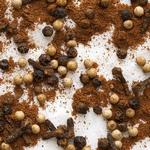
- 1 tbsp finely chopped thyme
- 1 tsp French Four Spices mix
- 2 large shallots, finely chopped (1/4 cup)
- 2 Turkish bay leaves, crumbled
- 6 fresh duck legs (Mulard, Muscovy, or Peking duck) (2.3 kg total)
- 2 whole cloves
- 5 packages (200 g each) of duck fat
- Equipment: deep fat thermometer
We recommend







Cooking the dish according to the recipe:
- Grind 4 cloves of garlic with a pinch of coarse salt to a paste. In a large bowl, combine the paste, coarse salt (1/4 cup), thyme, French spice mix, shallot, and bay leaf. Add the duck legs and toss to coat, then cover and refrigerate to marinate for at least 1 day or up to 2 days.
- Wipe the marinade off the duck legs with paper towels.
- Trim the top 1/4 inch off the head of garlic, then insert 2 whole cloves into the garlic. Melt the duck fat in a large, wide, heavy-bottomed saucepan over low heat, then add the head of garlic and duck legs and cook, uncovered, over low heat until the fat reaches 180°F (87°C), about 1 hour. Continue cooking the duck, maintaining a temperature of 180–200°F (87–98°C), until a wooden toothpick inserted easily into the meat, another 2–3 hours.
- Using a slotted spoon, transfer the duck to a large bowl (reserve the garlic for another use, if desired). Slowly pour the duck fat through a fine-mesh sieve into a large pot or deep bowl, reserving any cloudy liquid or meat juices at the bottom of the pan. Then pour the strained fat over the duck legs, covering them by an inch. (If necessary, trim the drumstick bones by an inch or two with a large knife to ensure the legs fit snugly in the bowl.) Cool to room temperature, about 2 hours, then cover and refrigerate for at least 8 hours.
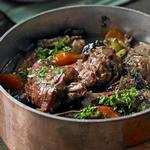
- Just before serving, remove the duck from the fat (reserve the fat for another use, such as frying) by scraping the legs. Then, roast skin-side down in a large, heavy nonstick skillet over low heat, covered, until the skin is crisp and the duck is heated through, 15 to 20 minutes.
Note:
Duck legs can be stored in the refrigerator, without removing them from the fat, for up to 3 months.
Categories:
Similar recipes