Yemeni coffee
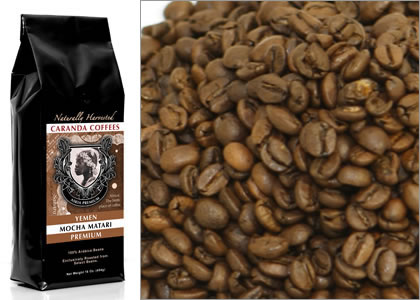
Mocha - one of the most confusing terms in the coffee lexicon. The coffee we call Mocha today is spelled "Mocha" and is grown in the mountains of Yemen in the southwestern Arabian Peninsula. It is known that coffee was originally shipped through the port of Mocha, which today is technically a perfect transportation hub. The name "Mocha" has become firmly entrenched in coffee vocabulary and continues to be used in the context of Yemeni and Arabic coffee. Complicating the identification of this coffee drink is the fact that Ethiopian Harrar coffee, which is very similar in taste and appearance (slightly smaller beans) to Yemeni coffee, is also sold as Mocha.
Yemeni Mocha Coffee is still grown, as it was over five hundred years ago, on terraces created on the slopes of semi-desert mountains. The flowering of the small coffee trees begins in the sultry summer, followed by the rainy season, and in the autumn the air becomes dry again, leading to the ripening of the coffee cherries. Coffee has been cultivated in Yemen for centuries. Yemeni Mocha is processed using a dry method. After the coffee cherries are dried, they are placed in millstones, which explains the uneven appearance of the beans. Some millstones are still driven by camels or donkeys, but even with more sophisticated equipment, Yemenis strive to adhere to fundamental coffee production techniques. The husks of the dried coffee fruit are used to prepare a drink that is brewed with spices and cooled to room temperature. The natives drink hot coffee (brewed with sugar) only in the morning, after bathing and prayer.
In almost all of Yemen, coffee is grown from ancient varieties. Coffea Arabica, which are practically extinct in the world. There are several local coffee varieties (about a hundred) that remain unidentified. One variety, however, has become widely known: Ismaili coffee—tiny, round beans resembling peas.
The most famous Yemeni coffee is Mattari, which grows in the area west of the capital, Sana'a. Although most coffee exporters blend genuine Mattari with other non-original coffees, it is still sold under this name and has a sour and complex aroma.
Hirazi coffee got a somewhat tart and fruity taste, but a little lighter compared to the previous one.
Sanani (Sanani - the market that gave its name to another type of coffee), is a blend of coffees from different regions (including Rami), is, as a rule, more balanced, less acidic than Mattari and Hirazi.
Categories:
Related articles