Mooncakes (Yuebing)

Complexity: average
Servings: 12
Calories 204, total fat 10 G., saturated fats 2 G., proteins 2 G., carbohydrates 29 G., fiber 0 G., cholesterol 16 mg, sodium 11 mg, sugar 15 G.
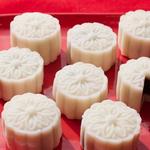
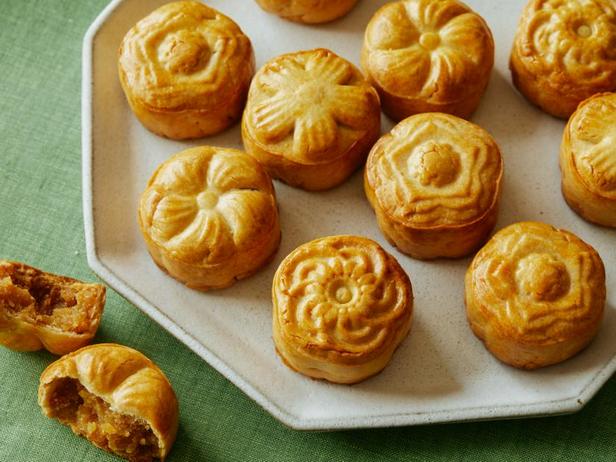
Mooncakes are traditionally served in China and Vietnam during the Mid-Autumn Festival, when families gather to celebrate the harvest and pray for longevity and good fortune. Mooncakes, or yue bing, are one of the symbols of this festival. In Chinese culture, the round shape symbolizes completeness and reunion, so yue bing are eaten with family. The cakes are made from a soft dough with a sweet filling (usually lotus seed paste or red bean paste). Each cake is decorated with Chinese symbols. They are most easily made in special yue bing molds. Bakeries stamp their mooncakes with their own designs: flowers, vines, and the moon are popular motifs. Each family has its own favorite version, based on recipes passed down from generation to generation. To make the pies look beautiful and glossy, brush them with beaten egg after 10 minutes of baking and continue baking until done.
1 glass (st.) - 250 ml.
3/4 cup (st.) - 180 ml.
2/3 cup (st.) - 160 ml.
1/2 cup (st.) - 125 ml.
1/3 cup (st.) - 80 ml.
1/4 cup (st.) - 60 ml.
1 tablespoon (tbsp) - 15 ml.
1 teaspoon (tsp) - 5 ml.
1/5 teaspoon (tsp) - 1 ml.
Ingredients for the recipe:
Lotus seed paste
- 1 cup dried lotus seeds
- 3/4 cup + 2 tablespoons sugar
- 1 tbsp. + 1/3 cup of shortening
Dough
- 1/4 cup golden syrup
- 0.5 tsp alkaline water (kansui) *
- 2 tablespoons of vegetable oil
- 2/3 cup cake flour
- 1/3 cup premium flour + extra for working with the dough
- 1 large egg, lightly beaten
- Special equipment: a 5cm plastic mooncake mold or a wooden mooncake mold that fits 4 mooncakes
We recommend







Cooking the dish according to the recipe:
- Lotus seed paste:
Place dried lotus seeds in a medium bowl and add plenty of room-temperature water. Soak for at least 6 hours, or preferably overnight. - Rinse the lotus seeds under cold water, then split them in half to remove and discard the green shoot in the center (very bitter). Transfer the seeds to a large saucepan and cover with water. Bring to a boil over medium heat, then reduce the heat to medium-low and simmer until the seeds are soft enough to mash with a fork, about 1 hour.
- Drain thoroughly, then transfer the seeds to a food processor while still warm. Add 3/4 cup sugar and pulse until smooth. Add an additional 1-2 tablespoons of water if necessary to achieve a very smooth paste. Strain through a fine-mesh sieve into a medium bowl.
- In a medium nonstick skillet over medium heat, melt 1 tablespoon shortening with the remaining 2 tablespoons sugar, cooking until the sugar caramelizes and turns a rich golden color, about 5 minutes.
- Add the lotus seed puree and cook, stirring constantly, until most of the liquid has evaporated and the puree has the texture of thick mashed potatoes, 6 to 8 minutes. Add the remaining 1/3 cup fat and continue cooking, stirring constantly, until all the fat is absorbed and the paste is very thick, glossy, and pulls away from the sides of the pan, about 6 more minutes. The finished lotus seed paste should be amber-brown in color and almost elastic in texture. Transfer it to a medium bowl and let cool completely.
- Dough:
Meanwhile, in a large bowl, whisk together the golden syrup, lye water, and vegetable oil until smooth. Add all the flour and stir with a wooden spoon until a rough dough forms. Gently knead the dough until it comes together completely, then wrap it in plastic wrap and set it aside to rest for about 45 minutes.Golden syrup is an amber-colored syrup made from sugar. It differs from regular sugar syrup in its thickness and richer flavor. It also contains acid, which helps make pie dough tender. - Preheat oven to 175°C. Line a baking sheet with parchment paper.
- Divide the lotus seed paste into 12 equal portions (approximately 2.5 tablespoons each) and form into balls approximately 5 cm in size. Place on a plate and refrigerate for 20-30 minutes. The colder the balls, the easier it will be to assemble the patties.
- Scoop about 1 tablespoon of dough and form it into a ball, then place it between two sheets of lightly floured parchment paper. Roll the dough with a rolling pin to a thickness of about 0.3 cm and a width of 8-10 cm. Place one ball of lotus paste in the center of the dough and close the dough over it, pinching the edges to seal. Roll the ball in your hands to smooth the surface.
- Place the assembled ball into a 2-inch-wide plastic mooncake mold, holding it vertically above the work surface. Press the plunger until you feel resistance, then lift the mold and gently press the mooncake onto the countertop. Transfer to the prepared baking sheet and refrigerate while you make the remaining mooncakes.
- Bake the mooncakes until the tops are opaque and the dough is set, 10-12 minutes. Let cool for 10 minutes.
- Whisk the egg in a small bowl with a little water, then brush the tops and sides of each pie. Return to the oven and bake until deep golden brown, another 10-15 minutes. Let cool on the baking sheet for 10 minutes, then transfer to a wire rack to cool completely. Enjoy fresh or store in a tightly sealed container for up to 2 days (the surface will develop a shiny finish over time).
Note *
Alkaline water, also known as kansui, is an alkaline solution of sodium carbonate and potassium carbonate. It's often used in Asian baked goods and ramen noodles. Kansui acts much like baking soda, making the dough fluffy and moist without excess gas. It also imparts a yellow color to the dough. In mooncakes, lye water neutralizes the acidity in the golden syrup, so the dough doesn't have a sour taste.
Categories:
Similar recipes