Hiyashi-tyuka
Votes: 1

Time: 35 min.
Complexity: easily
Servings: 4
Complexity: easily
Servings: 4
Nutritional value per serving:
Calories 1012, total fat 53 G., saturated fats 16 G., proteins 31 G., carbohydrates 104 G., fiber 6 G., cholesterol 160 mg, sodium 4851 mg, sugar 14 G.
Calories 1012, total fat 53 G., saturated fats 16 G., proteins 31 G., carbohydrates 104 G., fiber 6 G., cholesterol 160 mg, sodium 4851 mg, sugar 14 G.
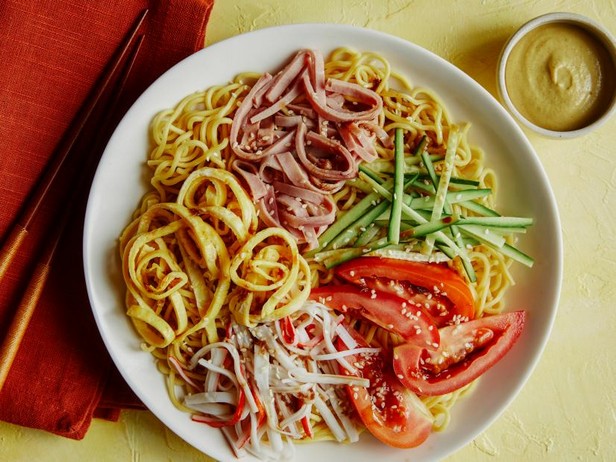
Although the name hiyashi-chuka literally means "cold Chinese," this cold noodle salad is actually a Japanese dish traditionally prepared in the summer. This salad is light, refreshing, and easy to prepare. It consists of cold noodles, thinly sliced toppings of various colors, and a soy sauce-based dressing. The most common toppings are ham, crab sticks, cucumbers, tomatoes, and Japanese omelette, but you can add whatever you like. This recipe works with both fresh ramen noodles and dry instant noodles (no seasoning packet required). Fresh noodles are, of course, more expensive, need to be refrigerated, and are harder to find, but they have one advantage: they absorb sauce better.
The recipes use measuring containers with the following volumes:
1 glass (st.) - 250 ml.
3/4 cup (st.) - 180 ml.
2/3 cup (st.) - 160 ml.
1/2 cup (st.) - 125 ml.
1/3 cup (st.) - 80 ml.
1/4 cup (st.) - 60 ml.
1 tablespoon (tbsp) - 15 ml.
1 teaspoon (tsp) - 5 ml.
1/5 teaspoon (tsp) - 1 ml.
1 glass (st.) - 250 ml.
3/4 cup (st.) - 180 ml.
2/3 cup (st.) - 160 ml.
1/2 cup (st.) - 125 ml.
1/3 cup (st.) - 80 ml.
1/4 cup (st.) - 60 ml.
1 tablespoon (tbsp) - 15 ml.
1 teaspoon (tsp) - 5 ml.
1/5 teaspoon (tsp) - 1 ml.
Ingredients for the recipe:
Sauce
- 0.5 cup soy sauce
- 0.5 tbsp. rice vinegar
- 1/4 tbsp. sesame oil
- 3 tbsp. granulated sugar
- 2 tablespoons grated peeled ginger root
Kinsey tamago (sliced Japanese omelette)
- 3 large eggs
- Neutral-flavored vegetable oil for greasing
Assembly
- 4 packages of 140 grams of fresh or 5 packages of 85 grams of dry ramen noodles
- 110 g thin slices of ham, cut into thin strips
- 4 crab sticks (surimi; about 100 g), tear into long strips
- 2 small tomatoes, each cut into 8 wedges
- Half an English cucumber, sliced into thin strips
- 2 tablespoons white sesame seeds
- Karashi (hot Japanese mustard), for serving (optional)
We recommend







Recipes with similar ingredients: soy sauce, rice vinegar, sesame oil, sugar, ginger root, eggs, ramen noodles, ham, crab meat, tomatoes, cucumbers, sesame
Cooking the dish according to the recipe:
Sauce:
In a medium bowl, combine the soy sauce, vinegar, sesame oil, sugar, ginger, and 3 tablespoons of water until the sugar dissolves. Cover and refrigerate until ready to use.Kinsey tamago (sliced Japanese omelette):
In a small bowl, beat the eggs with a pinch of salt. Strain through a sieve into another small bowl (this is optional, but it helps the omelet to be smoother and less lumpy). Heat a 20cm nonstick frying pan over medium-low heat. Lightly wipe the surface of the pan with a folded paper towel dipped in a little vegetable oil.- Add about 3 tablespoons (see note) of beaten eggs and immediately tilt the pan quickly in all directions to evenly coat the bottom. Cook until the omelet is set, about 20 seconds. Carefully flip with a spatula, using your fingers if necessary, and smooth out any wrinkles. Cook until set, about 5 more seconds.
- Transfer the omelet to a cutting board. Fry 2 more omelets in the same manner, brushing the pan with oil, and stack them.
- Roll up a stack of Japanese omelettes and cut them crosswise into 0.3 cm thick slices. Carefully separate them into strips.
Assembly:
In a large saucepan, bring water to a boil over high heat.- When the water boils, cook the noodles according to package directions. Drain and rinse the noodles under cold running water, tossing them with your hands until they're completely cool and all excess starch has been removed. Drain thoroughly, otherwise the water will dilute the sauce.
- Divide the noodles into 4 shallow bowls. Arrange the ham, surimi, tomatoes, cucumbers, and kinshi tamago in separate piles on top of the noodles. Sprinkle with sesame seeds and add a spoonful of karashi, if using. Serve with chilled sauce.
Note
Measure the beaten egg into a 1/4-cup measuring cup. Since the omelet cooks so quickly, you won't have time to evenly coat the bottom of the pan if you spoon the egg in. You can also simply eyeball the amount by pouring 1/3 of the egg into the pan at a time.
Categories:
Recipe collections








Similar recipes