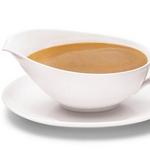
Gluten-free gravy
Votes: 1

Time: 2 hours 30 minutes
Complexity: easily
Servings: 8
Complexity: easily
Servings: 8
Nutritional value per serving:
Calories 259, total fat 12 G., saturated fats 2 G., proteins 18 G., carbohydrates 17 G., fiber 2 G., cholesterol 49 mg, sodium 584 mg, sugar 3 G.
Calories 259, total fat 12 G., saturated fats 2 G., proteins 18 G., carbohydrates 17 G., fiber 2 G., cholesterol 49 mg, sodium 584 mg, sugar 3 G.
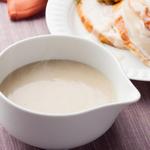
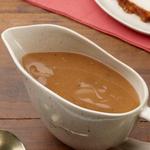
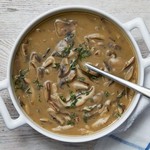
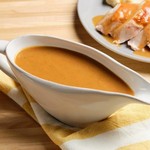
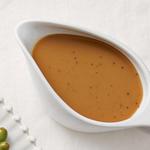
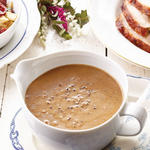
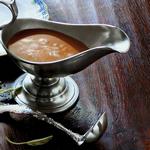
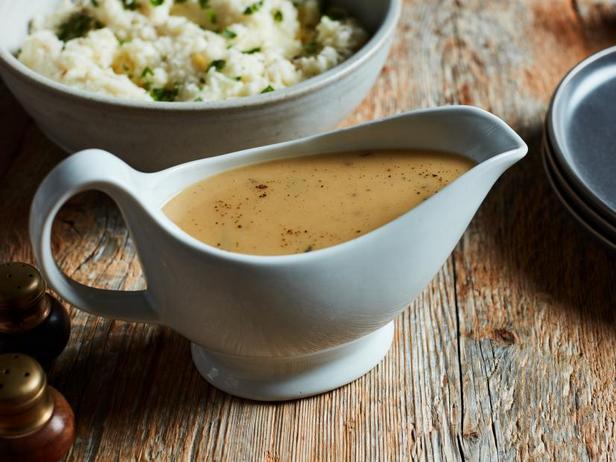
In search of a delicious gluten-free gravy that everyone at the table would love, we tried all sorts of starches, including corn, potato, and arrowroot. Glutinous rice flour proved to be the best option. It provides a good texture, doesn't affect the flavor of the sauce, and reheats beautifully, creating the velvety gravy everyone loves. This recipe works well with both turkey and chicken gravy.
The recipes use measuring containers with the following volumes:
1 glass (st.) - 250 ml.
3/4 cup (st.) - 180 ml.
2/3 cup (st.) - 160 ml.
1/2 cup (st.) - 125 ml.
1/3 cup (st.) - 80 ml.
1/4 cup (st.) - 60 ml.
1 tablespoon (tbsp) - 15 ml.
1 teaspoon (tsp) - 5 ml.
1/5 teaspoon (tsp) - 1 ml.
1 glass (st.) - 250 ml.
3/4 cup (st.) - 180 ml.
2/3 cup (st.) - 160 ml.
1/2 cup (st.) - 125 ml.
1/3 cup (st.) - 80 ml.
1/4 cup (st.) - 60 ml.
1 tablespoon (tbsp) - 15 ml.
1 teaspoon (tsp) - 5 ml.
1/5 teaspoon (tsp) - 1 ml.
Ingredients for the recipe:
- 1/4 cup extra-virgin olive oil
- Turkey neck and giblets, excluding liver
- 2 stalks celery, each cut into 3 pieces
- 1 medium onion, cut in half
- 1 large carrot, cut into 5cm pieces.
- 4 cups low-sodium chicken broth (or turkey broth)
- 4 sprigs of fresh thyme
- 4 sprigs of fresh parsley
- 1 sprig of fresh rosemary
- 1 sprig of fresh sage
- 1 dried bay leaf
- Rendered turkey fat (in a roasting pan)
- 0.5 cups glutinous rice flour
- 0.5 cups dry white wine
- 1/8 tsp Worcestershire sauce
We recommend







Recipes with similar ingredients: celery, carrot, thyme, bay leaf, rosemary, sage, bouillon, white wine
Cooking the dish according to the recipe:
- Heat olive oil in a large saucepan over medium-high heat. Add the neck and giblets and cook until deep golden brown on each side, about 3 minutes per side. Add the celery, onion, and carrots and cook, stirring occasionally, until the vegetables are golden brown, 4 to 5 minutes. Add the broth, thyme, parsley, rosemary, sage, and bay leaf, then cover and reduce heat to medium-low. Simmer until the broth has reduced slightly, about 2 hours (this can be done while the turkey is roasting). Remove the neck, giblets, vegetables, and herbs from the pan, reserving the broth.
Note
Turkey neck and giblets can be replaced with chicken ones and rendered chicken fat can be used. - Pour the contents of the roasting pan the turkey was roasted in into a liquid measuring cup or fat separator. Set aside to allow the fat to separate from the juices. This should take about 5 minutes. Alternatively, place the measuring cup in the freezer to speed up the settling. Once the fat has separated, skim 1/2 cup of the fat from the surface of the juices into a small bowl and set aside. Skim off any excess fat from the remaining juices.
- Place the Dutch oven on the stovetop over medium heat. Add the wine and cook, scraping the bottom with a wooden spoon to loosen any browned bits, until the wine has evaporated slightly, about 2 minutes. Pour the wine mixture into the hot broth.
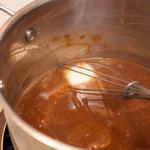
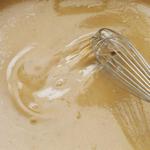
- Return the Dutch oven to medium heat and add the reserved fat. Sprinkle the rice flour evenly over the fat and cook, stirring constantly with a wooden spoon, until the flour is lightly browned and fragrant, about 4 minutes. Using a whisk, gradually and carefully pour the hot broth into the Dutch oven, whisking constantly. The flour mixture will set and become lumpy at first, but continue whisking until it becomes smooth.
- Bring the gravy to a boil, then reduce the heat and add the turkey juices. Continue to simmer, stirring occasionally, until the sauce thickens, about 5 minutes. Add the Worcestershire sauce and season with salt and pepper to taste. Serve hot.
Note
If you prefer the gravy to be as smooth and velvety as possible, blend it with an immersion blender for 1-2 minutes.
Categories:
Similar recipes