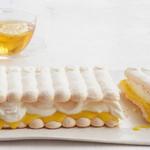
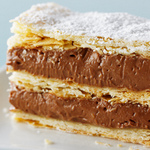
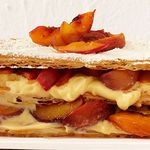
Napoleon cake

Complexity: easily
Servings: 9
Calories 760, total fat 41 G., saturated fats G., proteins 17 G., carbohydrates 81 G., fiber G., cholesterol mg, sodium mg, sugar G.
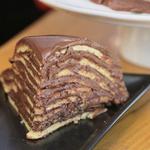
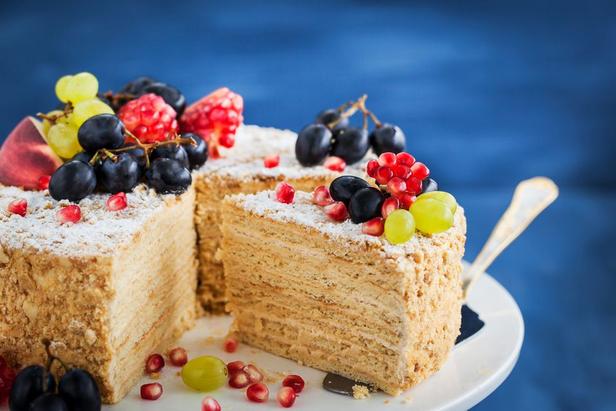
Despite the abundance of new, trendy cakes these days, the good old Napoleon cake can easily compete in taste. Soft and melt-in-your-mouth, this layered cake, drenched in custard, has long been a traditional Russian pastry. Indeed, in Soviet times, no New Year's Eve was complete without it. Napoleon was king of the holiday table, eagerly awaited and savored, and Soviet housewives constantly copied each other's recipes, though each still had their own signature cake. The recipe isn't complicated, though it's labor-intensive. You'll need patience and bake 16 layers. Spread each layer with custard and refrigerate the cake to soak. The result will impress. Some will reminisce about the taste of childhood, while others will discover a new favorite dessert.
1 glass (st.) - 250 ml.
3/4 cup (st.) - 180 ml.
2/3 cup (st.) - 160 ml.
1/2 cup (st.) - 125 ml.
1/3 cup (st.) - 80 ml.
1/4 cup (st.) - 60 ml.
1 tablespoon (tbsp) - 15 ml.
1 teaspoon (tsp) - 5 ml.
1/5 teaspoon (tsp) - 1 ml.
Ingredients for the recipe:
Cakes
- 4 tbsp (60 g) butter, softened
- 1 tbsp. sugar
- The whites of 2 large eggs (room temperature, well beaten)
- 1 cup sour cream (room temperature)
- 1 tbsp. vodka
- 1 pinch of salt
- 2 cups premium flour
Custard
- 6 cups whole milk
- 10 large egg yolks (room temperature)
- White of 1 large egg (room temperature)
- 2.5 cups of sugar
- 6 tablespoons flour
- 1 tbsp vanilla extract
- 16 tbsp (230 g) butter
We recommend






Cooking the dish according to the recipe:
- Knead the puff pastry.
In a large bowl, beat 60 g of butter and 1 tbsp of sugar until creamy. Stir in 2 stiffly beaten egg whites, sour cream, vodka, and salt. Gently fold in the flour, one spoon at a time, until the dough is soft and pliable. You may not need all the flour. - Wrap the dough in cling film and refrigerate for 1–2 hours to make it easier to work with.
- Bake the dough layers.
Preheat oven to 190°C (375°F). Grease a baking sheet with butter and lightly dust with flour. Divide the dough into 16 pieces. Roll each portion directly on the prepared baking sheet into a very thin circle 20 cm in diameter. (If your baking sheet can fit two circles, that's great.)
Bake the cakes until golden brown, about 6 to 10 minutes. If the dough puffs up, pierce it with a fork.
Place each finished cake layer on a wire rack to cool. Bake all the dough portions in this manner. - Prepare the custard.
Pour the milk into a large saucepan and heat, but do not boil.
In a large bowl, beat the yolks, 1 egg white, and 2.5 cups of sugar until creamy. Add 6 tablespoons of flour and mix well.
Pour this mixture into the warm (but not scalding) milk in a saucepan, stirring constantly, first with a whisk until smooth, then with a wooden spoon until the cream thickens over low heat. Add vanilla and 230 g of butter. Stir the cream until smooth. - Remove the pan from the stove and let it cool, stirring the cream frequently.
- Assemble the cake.
Place one cake layer in a 20 cm springform pan and evenly cover it with a layer of cooled custard. Continue assembling the cake in this manner, finishing with the 15th cake layer with the custard. - Crumble the last 16th layer of cake and sprinkle it over the cake. Refrigerate for 5-6 hours.
Before serving, run a knife between the cake and the sides of the pan. Remove the pan and, using a cake spatula or two regular spatulas, carefully transfer the cake to a serving platter. Use an electric knife to cut it into neat, even slices and serve.
Categories:
Similar recipes