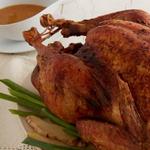
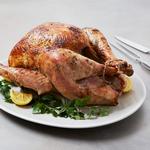
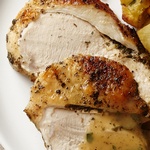
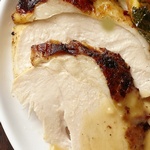
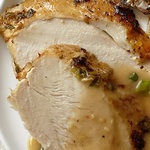
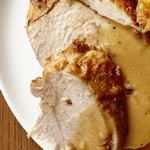
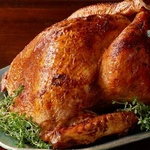
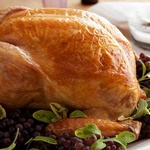
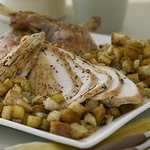
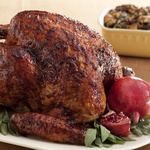
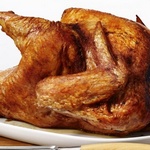
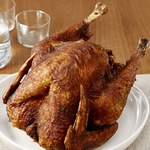
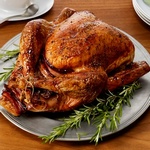
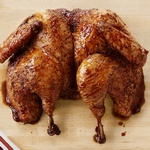
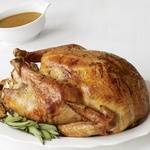
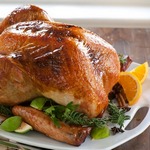
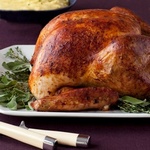
Turkey under a buttery blanket
Votes: 1

Time: 3 hours 50 minutes
Complexity: easily
Servings: 10 - 12
Complexity: easily
Servings: 10 - 12
Nutritional value per serving:
Serving size: 1 of 28 servings
Calories 329, total fat 20 G., saturated fats 10 G., proteins 33 G., carbohydrates 3 G., fiber 1 G., cholesterol 139 mg, sodium 599 mg, sugar 1 G.
Serving size: 1 of 28 servings
Calories 329, total fat 20 G., saturated fats 10 G., proteins 33 G., carbohydrates 3 G., fiber 1 G., cholesterol 139 mg, sodium 599 mg, sugar 1 G.
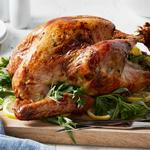
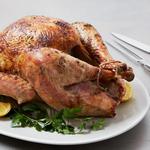
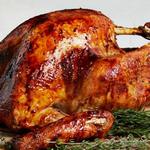
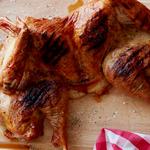
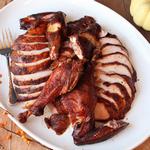
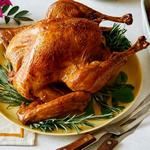
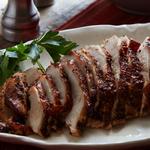
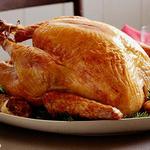
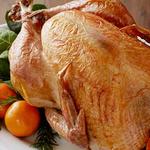
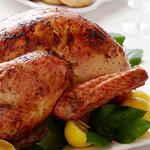
Roast a turkey under a blanket of cheesecloth soaked in plenty of butter, and you'll get a super-juicy, tender, and flavorful bird with a golden crust. This turkey cooking method works like magic, and you'll surely want to repeat it again and again. The turkey's cavity is filled with fragrant herbs, onions, and lemon, infusing the meat with this wonderful aroma. To prevent the cheesecloth from sticking to the skin, baste it thoroughly with fat and melted butter and remove it slowly.
The recipes use measuring containers with the following volumes:
1 glass (st.) - 250 ml.
3/4 cup (st.) - 180 ml.
2/3 cup (st.) - 160 ml.
1/2 cup (st.) - 125 ml.
1/3 cup (st.) - 80 ml.
1/4 cup (st.) - 60 ml.
1 tablespoon (tbsp) - 15 ml.
1 teaspoon (tsp) - 5 ml.
1/5 teaspoon (tsp) - 1 ml.
1 glass (st.) - 250 ml.
3/4 cup (st.) - 180 ml.
2/3 cup (st.) - 160 ml.
1/2 cup (st.) - 125 ml.
1/3 cup (st.) - 80 ml.
1/4 cup (st.) - 60 ml.
1 tablespoon (tbsp) - 15 ml.
1 teaspoon (tsp) - 5 ml.
1/5 teaspoon (tsp) - 1 ml.
Ingredients for the recipe:
- 1 turkey weighing 5.5 - 6.5 kg.
- 3 sprigs of fresh thyme
- 2 sprigs of fresh rosemary
- 1 lemon, cut into wedges
- 1 large onion, cut into 6 wedges
- 330 g (1.5 cups) unsalted butter, melted, + 4 tablespoons room temperature butter
- 0.5 tsp paprika
- 3 stalks celery, broken into 3 pieces
- 3 medium carrots
- 1.5 cups chicken or turkey broth
- Special equipment: cheesecloth; roasting pan with rack; turkey baster; instant-read thermometer
We recommend





Cooking the dish according to the recipe:
- Position a rack on the lowest shelf of the oven (enough to fit the turkey on top) and preheat the oven to 230°C.
- Remove all giblets from the turkey cavity and set aside for another use. Dry the turkey thoroughly, inside and out, with paper towels. Rub the inside of the cavity with 1 teaspoon of salt and 0.5 teaspoon of black pepper. Stuff the turkey with thyme, rosemary, lemon wedges, and half of the onion wedges.
- In a small bowl, mix 4 tablespoons of room-temperature butter with the paprika to form a smooth paste. Using your hands, carefully separate the skin from the turkey breast and legs, being careful not to tear the skin. Evenly distribute half of the butter mixture under the skin on one side.
- Repeat on the other side, spreading the remaining butter mixture. Any remaining butter on your hands or in the bowl can be spread over the outside of the turkey. Sprinkle the outside of the turkey with 2 teaspoons of salt, being careful to distribute it evenly.
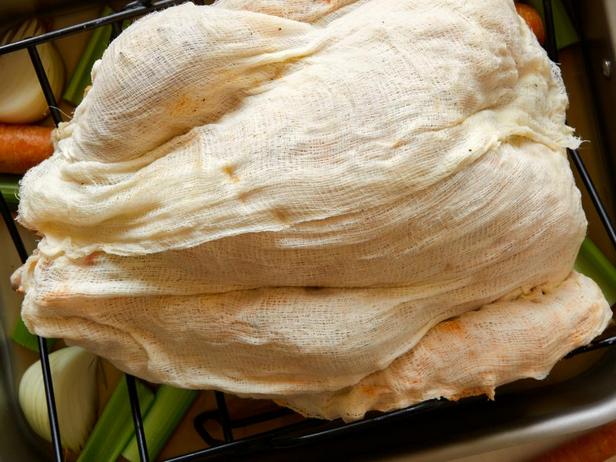
- Arrange the celery pieces, whole carrots, and remaining onion wedges in the bottom of the roasting pan. Place a rack on the roasting pan so it stands level. Pour the broth into the roasting pan. Transfer the turkey to the rack, tuck the wings under the body, and tie the legs together with kitchen twine. Cut a 20-inch piece of cheesecloth and fold it in half to create four layers.
- Dip the cheesecloth into the melted butter until completely saturated. Gently squeeze the cloth, fold it into 4 layers again, and drape the cheesecloth over the turkey, covering it completely. Using a turkey baster, drizzle the remaining melted butter over the cheesecloth.
- Roast the turkey for 30 minutes, then reduce the oven temperature to 350°F (175°C). Continue roasting, basting with oil and pan juices every 30 minutes, for another 2 hours.
- Very carefully remove the cheesecloth from the turkey, being careful not to damage the skin (see Note). Baste the turkey again, then return it to the oven, breast side facing the oven door, and roast until a thermometer inserted into the thickest part of the thigh registers 165°F (74°C), another 30 minutes. Let rest for 30 minutes before carving.
Note
To prevent the skin from sticking to the cheesecloth, make sure it's well-greased. If it does stick towards the end of baking, simply pour oil or rendered fat over the stubborn areas and slowly pull the cheesecloth away.
Categories:
Similar recipes