Korean soup "Samgyetang"
Votes: 1

Time: 1 hour.
Complexity: average
Servings: 4
Complexity: average
Servings: 4
Nutritional value per serving:
Serving size: 1 of 4
Calories 701, total fat 43 G., saturated fats 10 G., proteins 46 G., carbohydrates 34 G., fiber 4 G., cholesterol 210 mg, sodium 1822 mg, sugar 7 G.
Serving size: 1 of 4
Calories 701, total fat 43 G., saturated fats 10 G., proteins 46 G., carbohydrates 34 G., fiber 4 G., cholesterol 210 mg, sodium 1822 mg, sugar 7 G.
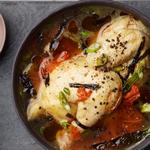
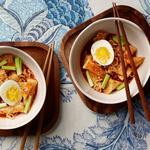
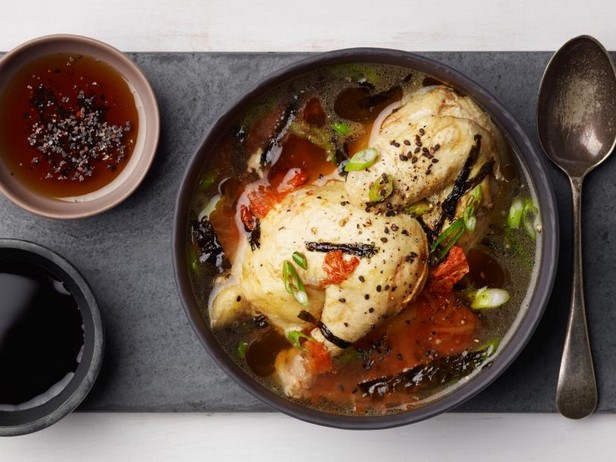
Korean samgyetang soup is traditionally made with young chickens stuffed with rice and ginseng. This soup is believed to have a restorative and invigorating effect on the body, and is traditionally eaten in Korea on the hottest days of summer. As the saying goes, fight fire with fire. This simplified version of samgyetang is made without ginseng, but the soup is no less delicious and aromatic with ginger and shallots. And instead of traditional glutinous rice, plain boiled white rice is stuffed into the chicken cavity (use up any leftovers from the side dish!). Serve half a stuffed chicken per serving, pouring broth over it and complementing it with traditional Korean toppings: kimchi, sesame seeds, soy sauce, and seaweed.
The recipes use measuring containers with the following volumes:
1 glass (st.) - 250 ml.
3/4 cup (st.) - 180 ml.
2/3 cup (st.) - 160 ml.
1/2 cup (st.) - 125 ml.
1/3 cup (st.) - 80 ml.
1/4 cup (st.) - 60 ml.
1 tablespoon (tbsp) - 15 ml.
1 teaspoon (tsp) - 5 ml.
1/5 teaspoon (tsp) - 1 ml.
1 glass (st.) - 250 ml.
3/4 cup (st.) - 180 ml.
2/3 cup (st.) - 160 ml.
1/2 cup (st.) - 125 ml.
1/3 cup (st.) - 80 ml.
1/4 cup (st.) - 60 ml.
1 tablespoon (tbsp) - 15 ml.
1 teaspoon (tsp) - 5 ml.
1/5 teaspoon (tsp) - 1 ml.
Ingredients for the recipe:
Soup
- 1 cup cooked white rice, cooled
- 1 tbsp dark sesame oil
- 4 cloves garlic (2 minced, 2 crushed and peeled)
- 2 gherkin chickens, weighing 700 g each, wings and giblets removed
- 4 cups lightly salted chicken broth
- 4 shallots, peeled and halved
- 7.5 cm ginger root, cut into 3 pieces and beat with the blunt side of a knife
- 6 green onions, white and light green parts uncut and set aside, dark green parts chopped for serving
- 1 teaspoon of sugar
For serving
- 3 tablespoons soy sauce
- 1 tbsp. white vinegar
- 4 tsp sesame seeds (white or black)
- 2 tablespoons dark sesame oil
- 1/4 tsp freshly ground black pepper
- 1 package seaweed chips, thinly sliced
- 1 cup kimchi, chopped
We recommend







Recipes with similar ingredients: rice, sesame oil, garlic, chicken, bouillon, shallots, ginger root, green onions, sugar, soy sauce, sesame, black pepper, seaweed, kimchi
Cooking the dish according to the recipe:
- Place the cooked rice in a medium bowl. Heat the sesame oil in a large saucepan over medium-high heat until shimmering. Add the minced garlic and cook, stirring frequently, until toasted and golden, 1 minute. Remove the pan from the heat and pour the garlic oil over the rice. Set the pan aside. Sprinkle the rice with 1/4 teaspoon of salt and toss with a fork to coat the rice evenly, breaking up any lumps.
- Place 0.5 cups of the rice mixture into the cavity of each chicken. Cover the cavity with skin to prevent the rice from escaping. Place the legs together and tie with kitchen twine.
- Place the hens, breast-side down, in the reserved saucepan and add the chicken broth, 2 cups water, shallots, ginger, white parts of the scallions, crushed garlic cloves, sugar, and 1 teaspoon salt. Bring to a boil over high heat, skimming off any foam that rises to the surface. Partially cover the pan and reduce the heat to maintain a steady simmer. Simmer for 15 minutes, then use a spatula and spoon to carefully turn the hens over, breast-side up, being careful not to break the skin (they will float). Continue simmering, partially covered, until the chicken breasts are firm and an instant-read thermometer inserted into the thickest part of the thigh registers 165°F (74°C), another 15 to 20 minutes.
- Meanwhile, prepare the sauce. Combine the soy sauce and vinegar in a small bowl and set aside. In another small bowl, combine the sesame oil, sesame seeds, 1/4 teaspoon salt, and 1/4 teaspoon black pepper and set aside.
- Using a slotted spoon and tongs, remove the chicken from the broth, place it on a cutting board, and trim the strings from the legs. Cut along the top of the breastbone to cut each chicken in half, keeping the rice inside the cavity. Strain the broth through a sieve. Place each chicken half in a wide, shallow bowl (rice side down) and ladle the soup into bowls. Sprinkle the soup with green onions and serve with sesame sauce, soy vinegar, kimchi, and seaweed.
Categories:
Similar recipes