Pudae-jjigae on a Campfire (Korean Army Stew)
Complexity: easily
Servings: 8
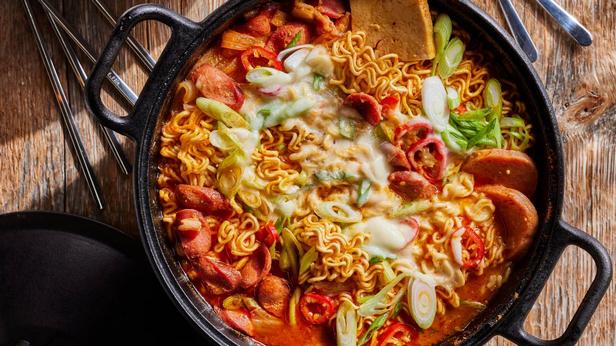
Pudae-jjigae, or army stew, is considered a typical Korean camping dish. The various ingredients in this dish can be stored in a portable refrigerator or at room temperature for extended periods, making it convenient to take on a camping trip. This recipe skips the broth preparation step, but if desired, you can mix the pudae-jjigae sauce in advance so you can simply add all the ingredients to the pot over a campfire during a camping trip and cook a delicious, flavorful dinner for a large group.
Nutritional value per serving:
Calories 814, total fat 42 G., saturated fats 14 G., proteins 36 G., carbohydrates 75 G., fiber 7 G., cholesterol 71 mg, sodium 2962 mg, sugar 5 G.
Calories 814, total fat 42 G., saturated fats 14 G., proteins 36 G., carbohydrates 75 G., fiber 7 G., cholesterol 71 mg, sodium 2962 mg, sugar 5 G.
Ingredients:
Pude-chjigae sauce
- 0.5 cup gochujang (Korean fermented chili paste)
- 1/4 cup kimchi brine
- 2 tablespoons doenjang (Korean fermented soybean paste)
- 2 tbsp. kochukaru
- 2 tbsp garlic powder
- 2 tbsp onion powder
- 2 tbsp mirin
- 1 tbsp fish sauce
- 1 tbsp gukganjang (Korean soy sauce)
- 1/4 tsp ground white pepper
- 10 cloves garlic, crushed
Toppings
- 1 cup coarsely chopped kimchi
- 8 strips bacon, chopped
- 1 medium onion, thinly sliced
- 1 medium leek (white and light green parts only), finely chopped
- 1 firm tofu (450g), thinly sliced
- 1 can (340 g) canned ham, sliced
- 5 sausages, sliced diagonally
- 3 packages of instant noodles (120g each)
- 220g cylindrical tteok (Korean rice sticks), rinsed
- 2 slices of mozzarella
- Chopped green onions or Fresno peppers for topping, optional
- Boiled rice, for serving
- Special equipment: camping cast iron cauldron with a capacity of 6 liters.
1 glass (st.) - 250 ml.
3/4 cup (st.) - 180 ml.
2/3 cup (st.) - 160 ml.
1/2 cup (st.) - 125 ml.
1/3 cup (st.) - 80 ml.
1/4 cup (st.) - 60 ml.
1 tablespoon (tbsp) - 15 ml.
1 teaspoon (tsp) - 5 ml.
1/5 teaspoon (tsp) - 1 ml.
3/4 cup (st.) - 180 ml.
2/3 cup (st.) - 160 ml.
1/2 cup (st.) - 125 ml.
1/3 cup (st.) - 80 ml.
1/4 cup (st.) - 60 ml.
1 tablespoon (tbsp) - 15 ml.
1 teaspoon (tsp) - 5 ml.
1/5 teaspoon (tsp) - 1 ml.
We recommend





Preparation:
- Step 1
- Pude-chjigae sauce:
In a medium bowl, combine the gochujang, brine, doenjang, gochukara, garlic powder, onion powder, mirin, fish sauce, gukganjang, white pepper, and garlic and stir with a spoon. Set aside. If making ahead, transfer to a container, seal tightly, and refrigerate until tomorrow.Korean soy sauce for soup is made from fermented soybean paste and has a stronger flavor than regular soy sauce.
Step 2 - Toppings:
Build a fire and let it burn down until there are plenty of hot coals.
Step 3 - Place kimchi, bacon, leeks, and pudae-jjigae sauce in separate portions on the bottom of the cauldron. Arrange slices of tofu, ham, and sausages on top of the first layer. Carefully pour in 7 cups of water. Cover the pot and place it over the coals. Pudae-jjigae is best made with mature or fully fermented kimchi.
Step 4
- Bring to a boil and cook, skimming off any foam or fat with a spoon as needed, until the broth is bright and thickened by the sauce, about 5 minutes. Taste and adjust the salt to taste. Add another 1/2 cup of water if needed. The broth should be fairly salty, as the starchy ingredients added later will soften the flavor. Step 5
- Add the noodles and tteok, cover, and simmer until the ramen is tender, 4–5 minutes, adding mozzarella slices on top of the noodles one minute before the end. Remove from heat. Sprinkle with green onions or chili pepper, if using, and serve with rice.Korean Pudae-jjigae soup is a one-pot dish for a crowd, made with instant noodles and preserved ham, garnished with rice sticks and green onions. Instead of beef broth, the recipe uses bacon to quickly create the broth. The addition of fish sauce and gochujang further flavors the broth and eliminates the need for anchovy broth.
Votes: 1
 Recipe author - Food Network
Categories
recipe / Calorie content of prepared meals / Main courses / Cereals, legumes / Meat / / Food Network - recipes / Korean cuisineSimilar recipes
Kalbi-chchim in a slow cooker (Beef ribs with
Los Angeles-style Kalbi
Samdyan
Scrambled eggs with green peppers and cheese on a campfire
Campfire Burrito
Hawaiian Pizza on a Campfire
Breakfast on a campfire

French toast with peanut butter and jam
Spicy Korean mayonnaise
Pork Bulgogi
Pasta with seafood and tomatoes on the fire
Fried chicken in garlic-soy glaze
Aged Cheddar Tomato Fondue,
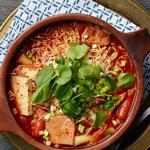
Pudae-jigae: Korean Army Soup
Korean-style baked pumpkin
Los Angeles-Style Kalbi
Haemul Kalguksu: Korean Noodles with Seafood
Fish chowder
Vegan Vegetable Curry Stew
S'mores Pie
Peanut butter s'mores

Strawberry s'mores
Happy tourists: snacks on a campfire
Posole Corn Chowder
Baked potatoes with sour cream and herbs
Fried potatoes with bacon, zucchini and fried eggs
Baked Oreo Marshmallow Cookies "S'mores"
Peanut Butter Marshmallow S'mores
Posole, a thick corn stew
American dessert S'mores

Cooking on coals
Mexican Posole Rojo
Appetizers
Beer snacks
Cheese appetizers
Sandwiches
Snacks
Canapes
Assorted appetizers
Snacks with sauces
Meat appetizers
Fish appetizers
Vegetable appetizers
Egg appetizers
Soups
Cold soups
Creamy soups
Cream soups
Soups with dressings
Clear soups
Vegetable soups
Thick soups, stews
Meat soups
Fish soups
Soups with pasta and cereals
Main courses
Meat
Bird, game
Side dishes
Vegetables, mushrooms
Fish, seafood
Cereals, legumes
Eggs, dairy products
Pasta
Casseroles
Salads
Warm salads
Vegetable salads
Leafy salads
Fruit salads
Salads with cereals and pasta
Salads with meat
Salads with fish
Salads with eggs
Salads with beans
Salads with bread
Fast food
Hamburgers
Sandwiches
Hot dogs
Pizzas
Hot sandwiches
Tortilla Dishes
Pita dishes
Pancakes
Sauces for fast food
Deep-fried dishes
Sauces
Seasonings
Gravies
Dips
Spreads
Barbecue glazes and sauces
Salad dressings
Oil mixtures
Emulsion sauces
Sweet sauces
Hot sauces
Sauces for fast food
Grill, barbecue
Grilled meat
Grilled poultry
Grilled fish
Smoked dishes
Grilled vegetables and fruits
Grilled flour products
Barbecue glazes and sauces
Bakery
Savory pies, pizzas
Homemade bread
Potato pancakes, pancakes
Unsweetened buns, pies
Unsweetened cookies and muffins
Desserts
Cupcakes
Fruit desserts
Cookie
Cakes
Donuts, pies, buns
Candies and small sweets
Creams, sauces, mousses, puddings
Soufflé, meringues, meringues
Jelly
Ice cream, sorbets
Cakes
Sweet pies, tarts
Pancakes, fritters, waffles, toast
Breakfast cereals, granola, muesli
Drinks
Milkshakes
Smoothies, granitas
Coffee and chocolate based drinks
Fruit drinks, juices
Tea and herbal drinks
Hot drinks
Alcoholic cocktails
Cocktails with vodka
Cocktails with gin
Whiskey cocktails
Cocktails with wine
Cocktails with brandy, cognac
Cocktails with absinthe
Cocktails with rum
Cocktails with sparkling wine
Tequila cocktails
Cocktails with beer
Cocktails with liqueurs
Frozen cocktails
Cooking methods
Air fryer
Pressure cooker
Cold dishes
Multicooker
Stuffed dishes
Deep-frying
Double boiler
Pan
Baking tray
Foil
Oven
Roaster
Mixer
Blender
Brazier
Food processor
Microwave
Wok
Pickled dishes
Dried and cured foods
Pickled dishes
Poached dishes
Salty dishes
Smoked dishes
Canned goods
Seasonal dishes
Festive dishes
New Year
Christmas
Valentine's Day
March 8
Easter
May 1st
Halloween
Birthday
Party Dishes
Wedding dishes
Cocktail party
Dinner party
Mother's Day
Cuisines of the world
European
French
Italian
Spanish
Greek
English
Irish
German
Portuguese
Austrian
Polish
Russian
Scandinavian Swedish
Asian Chinese Japanese Thai Vietnamese Korean Filipino
Arabic Jewish Turkish
Indian
African Moroccan
American Hawaiian Cajun Canadian Tex-Mex
Latin American Mexican Venezuelan Argentine Brazilian
Caribbean Cuban Jamaican
Scandinavian Swedish
Asian Chinese Japanese Thai Vietnamese Korean Filipino
Arabic Jewish Turkish
Indian
African Moroccan
American Hawaiian Cajun Canadian Tex-Mex
Latin American Mexican Venezuelan Argentine Brazilian
Caribbean Cuban Jamaican
Categories
Breakfasts
Lunches
Dinners
Children's dishes
Dishes for future use
Budget recipes
Comfort food
Recipes for one
Recipes for two
Picnic
Backyard Recipes
Dishes for fans
Movie Night Dishes
Cooking methods
Food Network Recipes
Recipe collections
Recipes by ingredients
Healthy eating
Healthy breakfasts
Lunches
Dinners
Healthy snacks
Dishes rich in fiber
Gluten-free dishes
Low sodium content
Low-calorie dishes
Dishes for diabetics
Low-carb meals
Low fat content
Low cholesterol
Calorie content of prepared meals
Vegetarian dishes
Vegan dishes