Pork belly sisig
Votes: 5

Time: 2 hours 20 minutes
Complexity: average
Servings: 6
Complexity: average
Servings: 6
Nutritional value per serving:
Calories 980, total fat 91 G., saturated fats 32 G., proteins 20 G., carbohydrates 22 G., fiber 3 G., cholesterol 150 mg, sodium 660 mg, sugar 2 G.
Calories 980, total fat 91 G., saturated fats 32 G., proteins 20 G., carbohydrates 22 G., fiber 3 G., cholesterol 150 mg, sodium 660 mg, sugar 2 G.
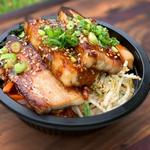
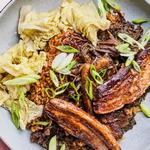
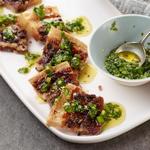
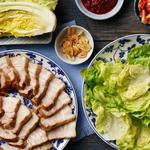
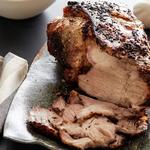
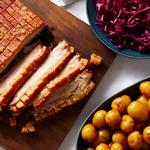
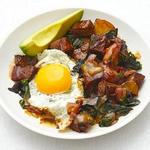
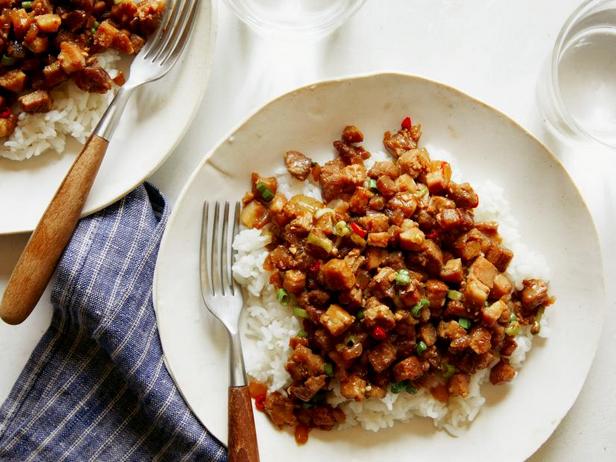
This Filipino dish is typically made from the cheapest cuts of pork, including cheeks and ears, and embodies the culture's "zero waste" philosophy. Braised and grilled pork is sliced and then fried again until crispy. Chopped chicken livers and spices are added, and everything is tossed in a sauce made with tart calamondin juice and soy sauce. "The name 'sisig' comes from an old Tagalog word meaning 'to make sour,'" says the recipe's author, food stylist Richmond Flores. In this recipe, pork belly replaces the cheeks and ears. The cooking process is time-consuming, but the results are worth the effort.
The recipes use measuring containers with the following volumes:
1 glass (st.) - 250 ml.
3/4 cup (st.) - 180 ml.
2/3 cup (st.) - 160 ml.
1/2 cup (st.) - 125 ml.
1/3 cup (st.) - 80 ml.
1/4 cup (st.) - 60 ml.
1 tablespoon (tbsp) - 15 ml.
1 teaspoon (tsp) - 5 ml.
1/5 teaspoon (tsp) - 1 ml.
1 glass (st.) - 250 ml.
3/4 cup (st.) - 180 ml.
2/3 cup (st.) - 160 ml.
1/2 cup (st.) - 125 ml.
1/3 cup (st.) - 80 ml.
1/4 cup (st.) - 60 ml.
1 tablespoon (tbsp) - 15 ml.
1 teaspoon (tsp) - 5 ml.
1/5 teaspoon (tsp) - 1 ml.
Ingredients for the recipe:
- 900 g pork belly with skin, cut into 3 equal parts
- 6 whole star anise
- 2 dried bay leaves
- 2 green onions, 1 cut into 5 cm pieces, 1 thinly sliced
- 1 head of garlic, cut in half crosswise
- 2.5 cm of ginger root, cut into coins approximately 0.5 cm thick.
- 1 stalk of lemongrass, beaten and cut diagonally into 5 cm pieces.
- 1 tbsp. black peppercorns
- 90 g of chicken liver or 3 tbsp of liver pate
- Vegetable oil for greasing
- 1/4 cup calamondin juice
- 3 tablespoons Liquid Aminos soy protein sauce
- 2 tablespoons soy sauce
- 1 tbsp unsalted butter
- 1 medium Spanish onion, diced into small cubes
- 6 cloves garlic, crushed
- 3 Thai chili peppers, thinly sliced
- Boiled jasmine rice, for serving
- Special equipment: skewers, gas or charcoal grill
We recommend







Recipes with similar ingredients: pork, star anise, bay leaf, ginger root, black peppercorns, chicken liver, jasmine rice, lemongrass, chili pepper
Cooking the dish according to the recipe:
- Place the pork belly, star anise, bay leaf, large green onion chunks, garlic halves, ginger, lemongrass, peppercorns, and 2 tablespoons of salt in a large saucepan. Pour in about 3 quarts of water and bring to a boil over high heat. Reduce heat and simmer until the pork is tender, about 1 hour. Let the liquid cool to room temperature. This will keep the pork moist and allow it to absorb more flavor. Transfer the pork to a cutting board and pat dry.
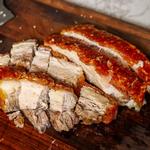
- Preheat the grill to 200°C (400°F) using both indirect and direct heat. Place the brisket, skin-side down, over indirect heat. Cover and cook until some of the fat has rendered and the skin begins to brown, about 20 minutes (see Note).
- Move the pork to the direct heat zone of the grill. Continue cooking until lightly charred and the skin is crisp, moving the brisket when hot spots appear, 15-20 minutes.
- Thread the chicken livers, if using, onto a skewer. Lightly oil and season with salt and black pepper.
- Remove the pork from the grill and let it cool. Place the liver over direct heat and cook, turning every 2-3 minutes, until firm and cooked through, about 12 minutes.
- Cut the pork into 0.5 cm cubes and set aside. Finely chop the chicken liver and set aside.
- Combine calamondin juice, soy protein sauce, and soy sauce in a small bowl and set aside.
- Heat a large cast-iron skillet over medium-high heat. Add the butter and pork and cook, stirring constantly and scraping up any browned bits, for about 10 minutes. Be careful not to get burned by splattering fat.
- Drain most of the fat from the pan, reserving only 3 tablespoons. Add the chopped liver, onion, and minced garlic and cook, stirring occasionally, until the onion is lightly crisp, 3-4 minutes. Add the calamondin mixture and cook until the sauce thickens slightly, about 2 minutes. Turn off the heat and stir in the Thai chili peppers and green onions. Serve with jasmine rice.
Note
Cooking over indirect heat will help render some of the fat and dry out the skin so it crisps up, while preventing the risk of grease fires.
Categories:
Recipe collections







Similar recipes