Potato bagel breakfast sandwiches
Votes: 1

Time: 8 hours 55 minutes
Complexity: easily
Servings: 9
Complexity: easily
Servings: 9
Nutritional value per serving:
Calories 1132, total fat 74 G., saturated fats 13 G., proteins 30 G., carbohydrates 88 G., fiber 4 G., cholesterol 173 mg, sodium 940 mg, sugar 8 G.
Calories 1132, total fat 74 G., saturated fats 13 G., proteins 30 G., carbohydrates 88 G., fiber 4 G., cholesterol 173 mg, sodium 940 mg, sugar 8 G.
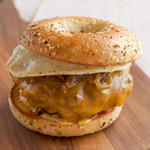
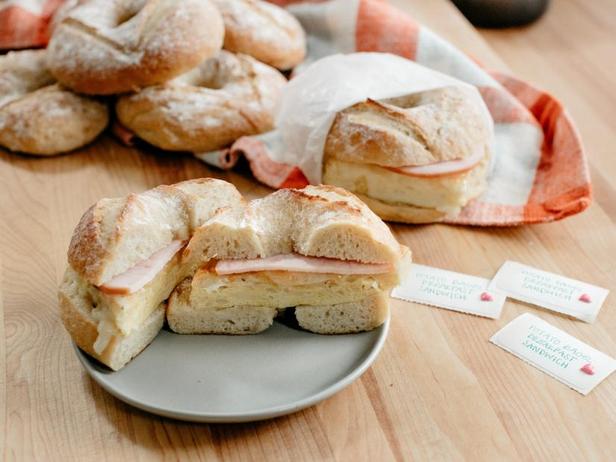
Molly Yeh makes the potato bagels for these sandwiches from scratch. The resulting buns are fluffy and deliciously soft, perfect for freezing sliced and tossing in the toaster for a delicious breakfast anytime in the morning. Try the sandwiches with egg casserole, cheese, and Canadian bacon (or ham).
The recipes use measuring containers with the following volumes:
1 glass (st.) - 250 ml.
3/4 cup (st.) - 180 ml.
2/3 cup (st.) - 160 ml.
1/2 cup (st.) - 125 ml.
1/3 cup (st.) - 80 ml.
1/4 cup (st.) - 60 ml.
1 tablespoon (tbsp) - 15 ml.
1 teaspoon (tsp) - 5 ml.
1/5 teaspoon (tsp) - 1 ml.
1 glass (st.) - 250 ml.
3/4 cup (st.) - 180 ml.
2/3 cup (st.) - 160 ml.
1/2 cup (st.) - 125 ml.
1/3 cup (st.) - 80 ml.
1/4 cup (st.) - 60 ml.
1 tablespoon (tbsp) - 15 ml.
1 teaspoon (tsp) - 5 ml.
1/5 teaspoon (tsp) - 1 ml.
Ingredients for the recipe:
Potato bagels
- 350 g potatoes, peeled and cut into 2 cm cubes.
- 2 and 1/4 teaspoons active dry yeast
- 2 tbsp + 1 tsp brown sugar
- 6 cups high-gluten flour, plus extra for dusting
- 1 tbsp coarse salt
- 7.5 tsp. barley malt syrup
- Neutral vegetable oil to grease the bowl
- 1 tbsp. baking soda
Egg casserole
- 1 cup frozen shredded hash brown potatoes, thawed
- 60 g Swiss cheese, grated
- 0.5 cups whole milk
- 0.5 tsp sweet paprika
- 0.5 tsp coarse salt
- 6 large eggs
- Freshly ground black pepper
- Hot sauce, optional
Sandwiches
- 9 slices Swiss or other cheese
- 9 slices Canadian bacon
We recommend






Recipes with similar ingredients: eggs, bacon, sandwich buns, potato
Cooking the dish according to the recipe:
- Potato bagels:
Place the sliced potatoes in a large saucepan and cover with water. Bring to a boil and cook until tender when pierced with a fork. Check for doneness after about 10 minutes. Drain the potatoes, pouring 1 cup of the water into a medium bowl. Mash the potatoes and set aside. - Add 0.5 cups of cool water to the bowl with the potato broth. The liquid should be warm (about 100°F/38°C). If it's too cold, warm it briefly in the microwave; if too hot, let it cool for a few minutes. Add the yeast and 1 teaspoon of brown sugar, stir briefly, and let it sit until foam appears on the surface, about 5 minutes.
- In a large bowl or the bowl of a stand mixer fitted with a dough hook, combine the flour, salt, and the remaining 2 tablespoons brown sugar. Add the mashed potatoes, yeast mixture, and 4.5 teaspoons malt syrup and knead until a stiff dough forms. Knead with the dough hook until the dough is smooth and slightly sticky, adding more flour if it sticks to the bowl or is too sticky, about 5 minutes (or turn the dough out onto a floured work surface and knead by hand for 7–10 minutes). Transfer the dough to a large, greased bowl, cover with plastic wrap, and refrigerate overnight.
- When ready to bake, let the dough sit at room temperature for 1 hour.
- Turn the dough out onto a clean work surface and divide it into 12-16 equal pieces, depending on whether you want larger or smaller bagels. Roll each piece into a smooth ball, making sure all seams are sealed. Form the bagels by inserting your thumb into the center of each ball and gently making a 2-inch (5 cm) hole with your fingers. Cover the bagels with a towel and let them rise for 15 minutes.
- Meanwhile, preheat oven to 230°C. Line 2 baking sheets with parchment paper and spray generously with cooking spray.
- Bring a large saucepan of water to a boil, then add baking soda and the remaining 3 teaspoons of malt syrup. Cook 3-4 bagels at a time, being careful not to overcrowd the pan, for 1 minute per side (use a timer). Using a slotted spoon or spatula, remove them from the water and transfer them to the prepared baking sheets, spacing them about 2 inches apart. If you're making 16 bagels, you'll likely need to bake them in three batches.
- Using a serrated knife, make 3 triangle-shaped cuts on the surface of each bagel and lightly dust them with flour. Bake for 10 minutes, then rotate the baking sheets, switch them, and bake until golden brown, another 5–8 minutes. Let the bagels cool slightly.
- Set aside 9 bagels for making breakfast sandwiches. Cool the remaining bagels completely, then transfer them to plastic bags and freeze (optional, cut them before freezing so you can toss them straight from the freezer). Reheat in a toaster.
- Egg casserole:
Preheat oven to 200°C. Spray a 9-inch square baking pan with cooking spray and line with parchment paper, leaving a 1-inch overhang on both sides. - Spread the hash browns in an even layer on the bottom of the prepared pan. Sprinkle the cheese evenly over the top. In a medium bowl, combine the milk, paprika, salt, eggs, a little black pepper, and a few drops of hot sauce, if using. Carefully pour the egg mixture over the cheese and potatoes.
- Bake until the eggs are set, about 20 minutes. Let cool for a few minutes to further set the eggs. Cut into 9 squares.
Sandwiches:
Cut 9 bagels in half. Layer each bagel halves with a square of egg pudding, a slice of cheese, and a slice of Canadian bacon. If not eating right away, wrap in parchment paper and freeze for up to 3 months. Microwave for 1 minute, flip, and microwave for another 1–2 minutes.
Categories:
Recipe collections


Similar recipes