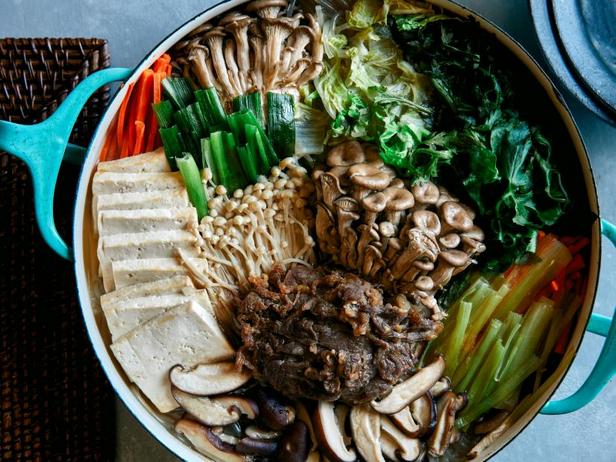
Jeongol with bulgogi
Complexity: average
Servings: 4
"Jeonggol is one of my favorite dishes for cool weather. I make it with thin slices of marinated beef, known as bulgogi. Jeongol is typically cooked and served in a communal pot placed in the center of the table on a portable stove. My recipe uses a very simple dried seaweed broth, which is poured over the ingredients in the pot. As it simmers, it develops a savory and sweet flavor. You can get creative with the layering of ingredients, but the dish will always be hearty and warming. The broth and bulgogi can be prepared the day before, and all the ingredients can be assembled the next day," says Jackie Ji Yoon Park.
Nutritional value per serving:
Calories 709, total fat 33 G., saturated fats 12 G., proteins 38 G., carbohydrates 68 G., fiber 9 G., cholesterol 77 mg, sodium 1520 mg, sugar 13 G.
Calories 709, total fat 33 G., saturated fats 12 G., proteins 38 G., carbohydrates 68 G., fiber 9 G., cholesterol 77 mg, sodium 1520 mg, sugar 13 G.
Ingredients:
Kombu broth
- 1 square kombu measuring 15 cm (tashima, dried kelp), approximately 170 g.
- 220 g unpeeled Korean radish, cut in half
- 1 tbsp gukganjang (soy sauce for Korean soup) or light soy sauce
Bulgogi
- 1/4 cup soy sauce
- 2 tablespoons of sugar
- 2 tbsp mirin
- 2 tablespoons dark sesame oil
- 3 cloves garlic, minced (about 1 tablespoon)
- 450 g thinly sliced ribeye steak or other beef
Assembly
- 110 g dangmyeon (Korean funchose)
- Half an onion, thinly sliced
- 220 g of black oyster mushrooms
- 220 g shiitake mushrooms, stems removed, caps cut into 0.5 cm thick slices.
- 220 g of medium-firm tofu, cut into 0.5 cm thick slices.
- 150 g enoki mushrooms, stems trimmed
- 100 g carrots, cut into thin strips
- 100 g watercress, chopped
- 100 g minari or watercress, chopped
- 100 g of Chinese cabbage, cut into small pieces
- 6 green onions, cut into 5cm long pieces.
- Steamed rice, for serving
- Special equipment: a deep frying pan with a diameter of 30 cm or a shallow saucepan with a lid
1 glass (st.) - 250 ml.
3/4 cup (st.) - 180 ml.
2/3 cup (st.) - 160 ml.
1/2 cup (st.) - 125 ml.
1/3 cup (st.) - 80 ml.
1/4 cup (st.) - 60 ml.
1 tablespoon (tbsp) - 15 ml.
1 teaspoon (tsp) - 5 ml.
1/5 teaspoon (tsp) - 1 ml.
3/4 cup (st.) - 180 ml.
2/3 cup (st.) - 160 ml.
1/2 cup (st.) - 125 ml.
1/3 cup (st.) - 80 ml.
1/4 cup (st.) - 60 ml.
1 tablespoon (tbsp) - 15 ml.
1 teaspoon (tsp) - 5 ml.
1/5 teaspoon (tsp) - 1 ml.
We recommend





Preparation:
- Step 1
- Bouillon:
In a large saucepan, cover the kombu leaves with 8 cups of cold water. Let sit until the kombu plumps up and the water turns a light greenish-yellow, about 30 minutes. Bring to a boil over medium-high heat and simmer until the kombu begins to foam around the edges, 1–3 minutes.
Step 2 - Discard the kombu, then add the radish and simmer until the radish is tender when pierced with a fork, about 25 minutes. Turn off the heat and add the guk ganjang and 1/2 teaspoon of salt. Discard the radish; you should have about 4 cups of broth. Set aside. Step 3
- Bulgogi:
In a large bowl, combine the soy sauce, sugar, mirin, sesame oil, garlic, and a few turns of the black pepper grinder until most of the sugar has dissolved.
Step 4 - Add the beef to the marinade and stir until well coated. Cover and refrigerate for at least 30 minutes and up to 8 hours. Step 5
- Assembly:
Soak the dangmyeon in a large bowl of lukewarm water until softened, about 20–30 minutes. Drain in a colander and set aside while you prepare the remaining ingredients.
Step 6 - Place the onions in the bottom of a rimmed skillet or shallow saucepan with a lid. Then add the soaked noodles. Add as much bulgogi, oyster mushrooms, shiitake mushrooms, tofu, enoki mushrooms, carrots, herbs, cabbage, and green onions as desired (pack the ingredients in tightly, as the mushrooms will cook down). Gently pour in the broth, starting with 3 tablespoons. Step 7
- Cover with a tight-fitting lid. Bring to a boil over high heat and cook until the vegetables are tender and the bulgogi is golden brown, 2–4 minutes. Add more broth and season with salt if desired. Serve immediately with rice. Step 8
- Note
Gukganjang sauce has a subtle, balanced flavor with hints of umami and salt, and is much lighter in color than regular soy sauce. It's typically used as a seasoning for Korean soups and stews, as it doesn't alter the color of the broth as much as regular soy sauce.
Korean grocery stores offer a variety of thinly sliced beef options. Ribeye steak is typically sold under the label "bulgogi," but any beef cut into 0.3 cm thick slices will do.
Votes: 1
Categories
recipe / Calorie content of prepared meals / Autumn dishes / Main courses / Meat / Vegetables and mushrooms / Eggs and dairy products / / Korean cuisineSimilar recipes
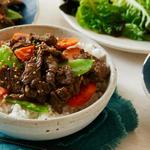
Beef Bulgogi with Carrots and Snow Peas
Meatless Bulgogi (Marinated Fried Eggplant)
Tteokbokki in soy sauce

27 Delicious Cheese Quesadillas You'll Love
Air Fryer Zucchini Bulgogi
Beef bulgogi quesadilla
Pork Bulgogi
Bibimbap
Recipes for simple and delicious dishes cooked in an air fryer
90 Delicious Weekday Fall Dinners
Appetizers
Beer snacks
Cheese appetizers
Sandwiches
Snacks
Canapes
Assorted appetizers
Snacks with sauces
Meat appetizers
Fish appetizers
Vegetable appetizers
Egg appetizers
Soups
Cold soups
Creamy soups
Cream soups
Soups with dressings
Clear soups
Vegetable soups
Thick soups, stews
Meat soups
Fish soups
Soups with pasta and cereals
Main courses
Meat
Bird, game
Side dishes
Vegetables, mushrooms
Fish, seafood
Cereals, legumes
Eggs, dairy products
Pasta
Casseroles
Salads
Warm salads
Vegetable salads
Leafy salads
Fruit salads
Salads with cereals and pasta
Salads with meat
Salads with fish
Salads with eggs
Salads with beans
Salads with bread
Fast food
Hamburgers
Sandwiches
Hot dogs
Pizzas
Hot sandwiches
Tortilla Dishes
Pita dishes
Pancakes
Sauces for fast food
Deep-fried dishes
Sauces
Seasonings
Gravies
Dips
Spreads
Barbecue glazes and sauces
Salad dressings
Oil mixtures
Emulsion sauces
Sweet sauces
Hot sauces
Sauces for fast food
Grill, barbecue
Grilled meat
Grilled poultry
Grilled fish
Smoked dishes
Grilled vegetables and fruits
Grilled flour products
Barbecue glazes and sauces
Bakery
Savory pies, pizzas
Homemade bread
Potato pancakes, pancakes
Unsweetened buns, pies
Unsweetened cookies and muffins
Desserts
Cupcakes
Fruit desserts
Cookie
Cakes
Donuts, pies, buns
Candies and small sweets
Creams, sauces, mousses, puddings
Soufflé, meringues, meringues
Jelly
Ice cream, sorbets
Cakes
Sweet pies, tarts
Pancakes, fritters, waffles, toast
Breakfast cereals, granola, muesli
Drinks
Milkshakes
Smoothies, granitas
Coffee and chocolate based drinks
Fruit drinks, juices
Tea and herbal drinks
Hot drinks
Alcoholic cocktails
Cocktails with vodka
Cocktails with gin
Whiskey cocktails
Cocktails with wine
Cocktails with brandy, cognac
Cocktails with absinthe
Cocktails with rum
Cocktails with sparkling wine
Tequila cocktails
Cocktails with beer
Cocktails with liqueurs
Frozen cocktails
Cooking methods
Air fryer
Pressure cooker
Cold dishes
Multicooker
Stuffed dishes
Deep-frying
Double boiler
Pan
Baking tray
Foil
Oven
Roaster
Mixer
Blender
Brazier
Food processor
Microwave
Wok
Pickled dishes
Dried and cured foods
Pickled dishes
Poached dishes
Salty dishes
Smoked dishes
Canned goods
Seasonal dishes
Festive dishes
New Year
Christmas
Valentine's Day
March 8
Easter
May 1st
Halloween
Birthday
Party Dishes
Wedding dishes
Cocktail party
Dinner party
Mother's Day
Cuisines of the world
European
French
Italian
Spanish
Greek
English
Irish
German
Portuguese
Austrian
Polish
Russian
Scandinavian Swedish
Asian Chinese Japanese Thai Vietnamese Korean Filipino
Arabic Jewish Turkish
Indian
African Moroccan
American Hawaiian Cajun Canadian Tex-Mex
Latin American Mexican Venezuelan Argentine Brazilian
Caribbean Cuban Jamaican
Scandinavian Swedish
Asian Chinese Japanese Thai Vietnamese Korean Filipino
Arabic Jewish Turkish
Indian
African Moroccan
American Hawaiian Cajun Canadian Tex-Mex
Latin American Mexican Venezuelan Argentine Brazilian
Caribbean Cuban Jamaican
Categories
Breakfasts
Lunches
Dinners
Children's dishes
Dishes for future use
Budget recipes
Comfort food
Recipes for one
Recipes for two
Picnic
Backyard Recipes
Dishes for fans
Movie Night Dishes
Cooking methods
Food Network Recipes
Recipe collections
Recipes by ingredients
Healthy eating
Healthy breakfasts
Lunches
Dinners
Healthy snacks
Dishes rich in fiber
Gluten-free dishes
Low sodium content
Low-calorie dishes
Dishes for diabetics
Low-carb meals
Low fat content
Low cholesterol
Calorie content of prepared meals
Vegetarian dishes
Vegan dishes