Decorating cakes with fresh flowers
What could be more beautiful for any celebration than a cake decorated with real fresh flowers!
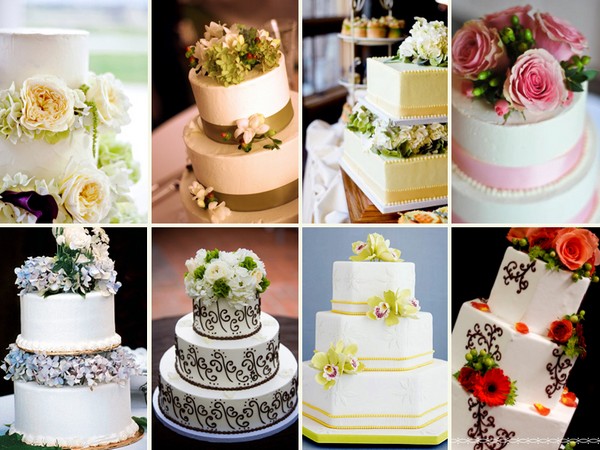
There are many edible flowers that can be used in cooking or garnishing. They are added to salads and used to make tinctures, oils, and vinegars. Because many flowers have a very strong aroma, they are not always suitable for decorating baked goods. Furthermore, eating some species can have adverse effects. For example, daylilies are edible, but they have a diuretic and laxative effect, so they are best used for decorative purposes only.
Preparing flowers
Before choosing flowers to decorate your dishes, you should determine whether they are edible. After that, it's important to know whether any fertilizers were used in their cultivation, and what kind. Of course, it's best to choose flowers you've grown yourself in your garden.
Take your chosen flowers and place them in a bowl of water to remove dust, pollen, and any insects. To keep them looking fresh, soak them in the water for at least half an hour. Then remove them from the water, cut the stems just below the base of the flower, and place them on a paper towel to remove excess water.
How to arrange flowers on a cake?
Draw a plan on a piece of paper the same size as the cake and lay the flowers on top of it so you can see how they will look together.
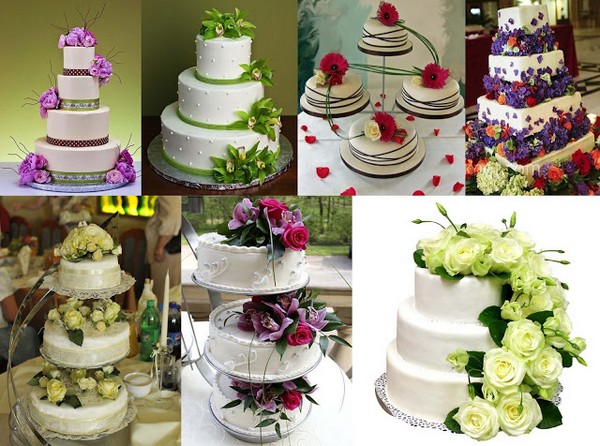
It's best to arrange mint leaves and small candies at the bottom of the cake. Choose candies that match the colors of the flowers you plan to place on top. This will create a harmonious cake look.
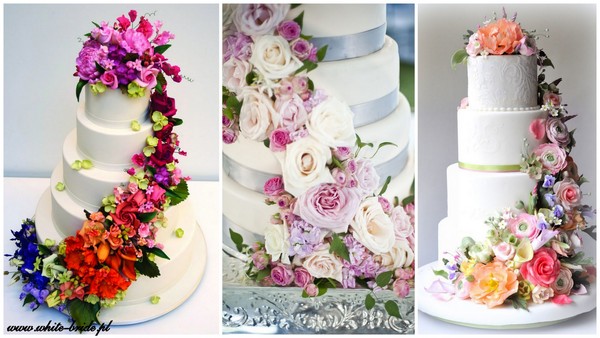
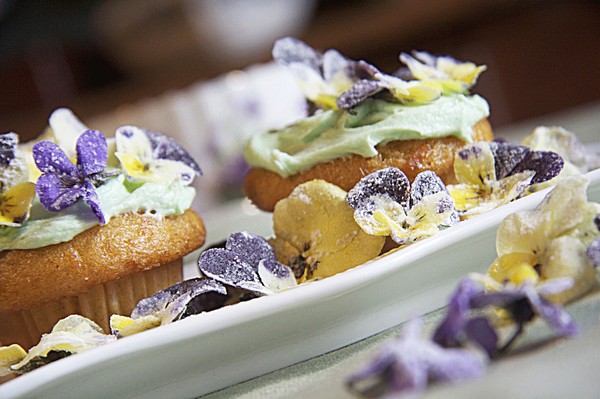
Now we can move on to decorating the top of the cake. Let's choose lilac violets as the flowers. Place about five of them in the center and add a few small mint leaves.
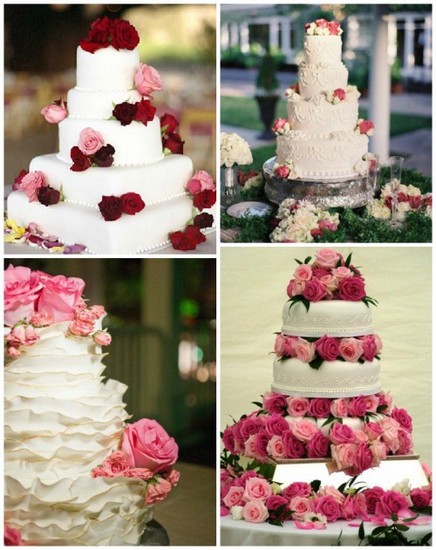
You can arrange larger flowers around the edge of the cake. There should be about five of them. These will be dark purple pansies. If you want geometric precision, you can measure the distance between the flowers with a ruler, although you can also do it by eye.
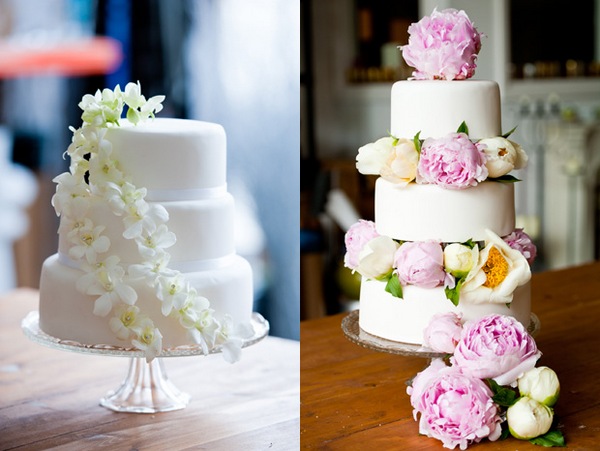
You can also add decorations to the sides of the cake, but if you want to draw attention to the top, you can place a single violet between the pansies instead.
Candied flowers for cake decoration
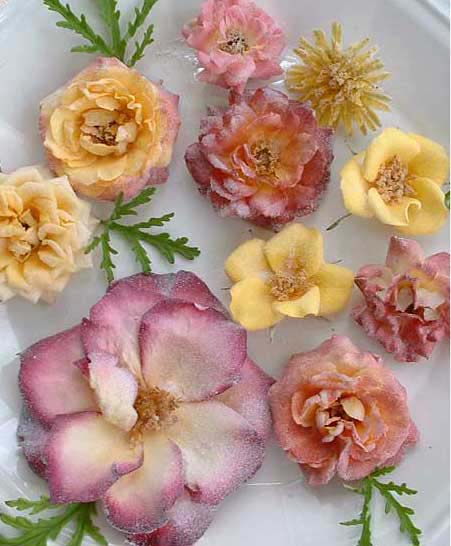
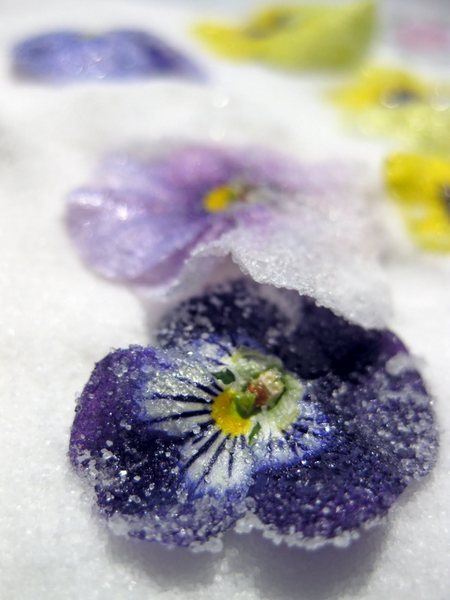
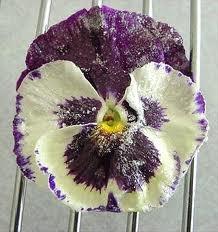
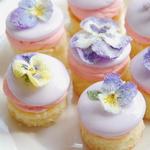
Instead of fresh flowers, you can use candied flowers. The advantage of candied flowers is that they can be used in a cake after the wildflowers have finished blooming or haven't yet bloomed. For example, candied flowers from your garden would look absolutely magical on a Valentine's Day cake. While buying flowers from a flower shop is certainly possible, it's not recommended, as the fertilizers used in their cultivation can be hazardous to your health.
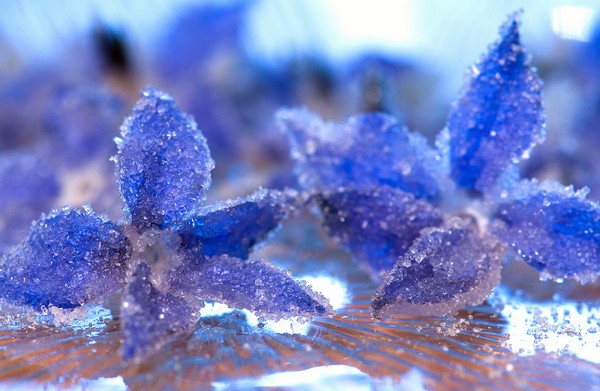
How to candied flowers on a cake?
To do this you need:
– 1 white of a large chicken egg;
– 1 teaspoon of water;
– 1 cup powdered sugar;
- small plate;
- a small, clean brush for painting;
- wax paper.
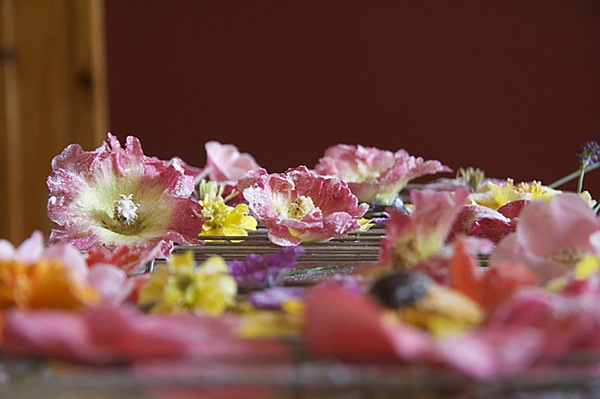
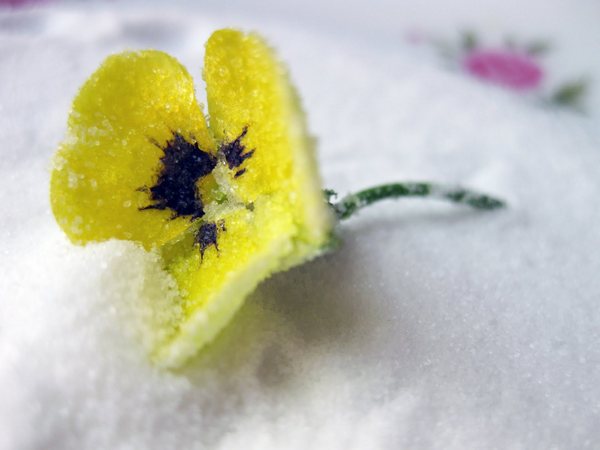
Using a fork or whisk, beat the egg white and water until lightly foamy. Using a brush, coat each flower petal with the egg white-water mixture. Hold the flower over a plate and dust it with powdered sugar on all sides. Shake off any excess powder and lay the flower on waxed paper to dry. At room temperature, the flowers will crystallize in 12-36 hours. If you want to speed up the drying process, place the flowers in an oven preheated to 145°F (65°C) for a few hours. Make sure the flowers are completely dry before storing. You can store them in a plastic container with waxed paper between each layer.
List of flowers that can be used to decorate a cake.
Next to the name of the flower, its color is indicated in brackets.
- Anise (lilac)
- Pansies (various colors)
- Basil (white)
- Impatiens (white, pink, red, orange)
- Marigolds (yellow, orange)
- Tuberous begonia (white, pink, red)
- Elderberry (white)
- Cornflower (white, pink or blue)
- Carnation (flowers of different colors)
- Scented geranium (white, red, pink)
- Honeysuckle (white, pale yellow)
- Calendula (yellow or orange)
- Lavender (pink)
- Forest spring violet (purple, yellow)
- Daylily (various colors)
- Snapdragon (various colors)
- Daisy (pink, white)
- Mint (purple)
- Lemon balm (flowers come in a variety of colors)
- Nasturtium (yellow)
- Borage (blue)
- Dandelion (yellow)
- Peony (white, pink, red)
- Sunflower (yellow)
- Rose (various colors)
- Rosemary (blue)
- Chamomile (white)
- Thyme (white)
- Tulip (different colors)
- Fennel (yellow, green)
- Violet (purple, white)
- Chrysanthemum (different colors)
- Apple tree (white or pink)
Votes: 1
Categories
Recipe collections / Culinary articlesSimilar recipes

Homemade yellow cupcakes with cream

Festive decoration of festive drinks
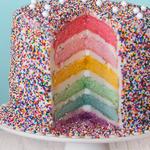
Rainbow Birthday Cake
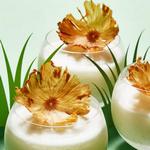
Pina Colada with a Pineapple Flower
Pumpkin kheer
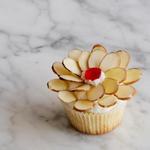
Almond Flower Cupcakes
Grilled pizza with fresh tomatoes and basil
Egg white omelette with herbs and fresh

Marshmallow Flower Cupcakes

Cupcakes with orange flowers
Nonpareil Flower Cupcakes
The Best Angel Food Cake
Vanilla pudding with fresh berries and ginger

5 Picnic Cupcake Cakes
Panna cotta with fresh berries

Chocolate icing for cakes
Chicken sandwich in batter
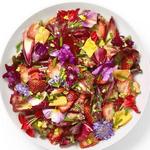
Strawberry salad with endive and edible flowers
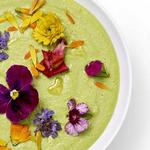
Green gazpacho with edible flowers
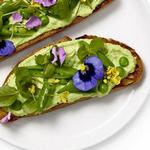
Crostini with ricotta and edible flowers
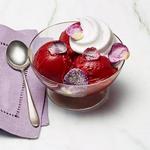
Sorbet with candied flowers
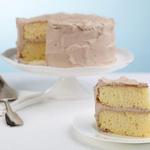
Golden cake

Cupcakes with cream flowers
Cake flour (pastry flour)
Candied flowers

Almond cake with fresh berries
Chocolate cake with vintage flowers
Salad with fresh mushrooms and parsley
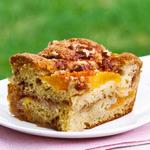
Fresh Peach Cake

Methods of decorating dishes
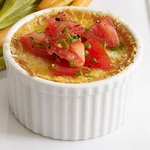
Corn soufflé with cheese and fresh tomatoes

Protein-butter cream glaze for cakes and cupcakes
Appetizers
Beer snacks
Cheese appetizers
Sandwiches
Snacks
Canapes
Assorted appetizers
Snacks with sauces
Meat appetizers
Fish appetizers
Vegetable appetizers
Egg appetizers
Soups
Cold soups
Creamy soups
Cream soups
Soups with dressings
Clear soups
Vegetable soups
Thick soups, stews
Meat soups
Fish soups
Soups with pasta and cereals
Main courses
Meat
Bird, game
Side dishes
Vegetables, mushrooms
Fish, seafood
Cereals, legumes
Eggs, dairy products
Pasta
Casseroles
Salads
Warm salads
Vegetable salads
Leafy salads
Fruit salads
Salads with cereals and pasta
Salads with meat
Salads with fish
Salads with eggs
Salads with beans
Salads with bread
Fast food
Hamburgers
Sandwiches
Hot dogs
Pizzas
Hot sandwiches
Tortilla Dishes
Pita dishes
Pancakes
Sauces for fast food
Deep-fried dishes
Sauces
Seasonings
Gravies
Dips
Spreads
Barbecue glazes and sauces
Salad dressings
Oil mixtures
Emulsion sauces
Sweet sauces
Hot sauces
Sauces for fast food
Grill, barbecue
Grilled meat
Grilled poultry
Grilled fish
Smoked dishes
Grilled vegetables and fruits
Grilled flour products
Barbecue glazes and sauces
Bakery
Savory pies, pizzas
Homemade bread
Potato pancakes, pancakes
Unsweetened buns, pies
Unsweetened cookies and muffins
Desserts
Cupcakes
Fruit desserts
Cookie
Cakes
Donuts, pies, buns
Candies and small sweets
Creams, sauces, mousses, puddings
Soufflé, meringues, meringues
Jelly
Ice cream, sorbets
Cakes
Sweet pies, tarts
Pancakes, fritters, waffles, toast
Breakfast cereals, granola, muesli
Drinks
Milkshakes
Smoothies, granitas
Coffee and chocolate based drinks
Fruit drinks, juices
Tea and herbal drinks
Hot drinks
Alcoholic cocktails
Cocktails with vodka
Cocktails with gin
Whiskey cocktails
Cocktails with wine
Cocktails with brandy, cognac
Cocktails with absinthe
Cocktails with rum
Cocktails with sparkling wine
Tequila cocktails
Cocktails with beer
Cocktails with liqueurs
Frozen cocktails
Cooking methods
Air fryer
Pressure cooker
Cold dishes
Multicooker
Stuffed dishes
Deep-frying
Double boiler
Pan
Baking tray
Foil
Oven
Roaster
Mixer
Blender
Brazier
Food processor
Microwave
Wok
Pickled dishes
Dried and cured foods
Pickled dishes
Poached dishes
Salty dishes
Smoked dishes
Canned goods
Seasonal dishes
Festive dishes
New Year
Christmas
Valentine's Day
March 8
Easter
May 1st
Halloween
Birthday
Party Dishes
Wedding dishes
Cocktail party
Dinner party
Mother's Day
Cuisines of the world
European
French
Italian
Spanish
Greek
English
Irish
German
Portuguese
Austrian
Polish
Russian
Scandinavian Swedish
Asian Chinese Japanese Thai Vietnamese Korean Filipino
Arabic Jewish Turkish
Indian
African Moroccan
American Hawaiian Cajun Canadian Tex-Mex
Latin American Mexican Venezuelan Argentine Brazilian
Caribbean Cuban Jamaican
Scandinavian Swedish
Asian Chinese Japanese Thai Vietnamese Korean Filipino
Arabic Jewish Turkish
Indian
African Moroccan
American Hawaiian Cajun Canadian Tex-Mex
Latin American Mexican Venezuelan Argentine Brazilian
Caribbean Cuban Jamaican
Categories
Breakfasts
Lunches
Dinners
Children's dishes
Dishes for future use
Budget recipes
Comfort food
Recipes for one
Recipes for two
Picnic
Backyard Recipes
Dishes for fans
Movie Night Dishes
Cooking methods
Food Network Recipes
Recipe collections
Recipes by ingredients
Healthy eating
Healthy breakfasts
Lunches
Dinners
Healthy snacks
Dishes rich in fiber
Gluten-free dishes
Low sodium content
Low-calorie dishes
Dishes for diabetics
Low-carb meals
Low fat content
Low cholesterol
Calorie content of prepared meals
Vegetarian dishes
Vegan dishes